
A common misconception is that a crypto wallet is secure if its private key remains secret. That is necessary, but it is not sufficient. A user can protect a seed phrase perfectly and still approve a harmful transaction, interact with the wrong contract, or misunderstand what a cross-chain swap is actually asking the wallet to do. In modern DeFi, security is less like guarding a key in a vault and more like reviewing a sequence of permissions, messages, and settlement steps.
Consider a familiar US user scenario. An investor holds an asset on one network, wants exposure to another, and opens a decentralized application through a browser wallet. The interface presents a convenient route: approve the token, sign a transaction, wait for the bridge or liquidity system to complete its work, and receive the destination asset. Nothing about that sequence necessarily looks dangerous. Yet each stage introduces a different failure mode. The central question is not simply, “Is this wallet safe?” It is, “What exactly is the wallet authorizing, on which network, through which contract, and with what ability to reverse the decision?”
From key storage to transaction interpretation
Early cryptocurrency wallets were often understood primarily as key managers. Their essential job was to generate addresses, store or access signing credentials, and broadcast transactions. That model remains important, but DeFi changed the practical security problem. Smart contracts can request token approvals, execute trades, lock collateral, mint assets, or call other contracts. The wallet is therefore not merely signing a payment; it may be signing a structured instruction whose consequences depend on code, state, and market conditions.
This is where transaction simulation and readable warnings become valuable. A security-oriented wallet can help users inspect the likely outcome of a transaction before signing, identify the network involved, and surface potentially risky contract behavior. Such tools do not prove that a transaction is safe. They reduce ambiguity. That distinction matters: a simulation is an informed preview of what may happen under current conditions, not a guarantee against every future state change, oracle failure, compromised front end, or malicious contract design.
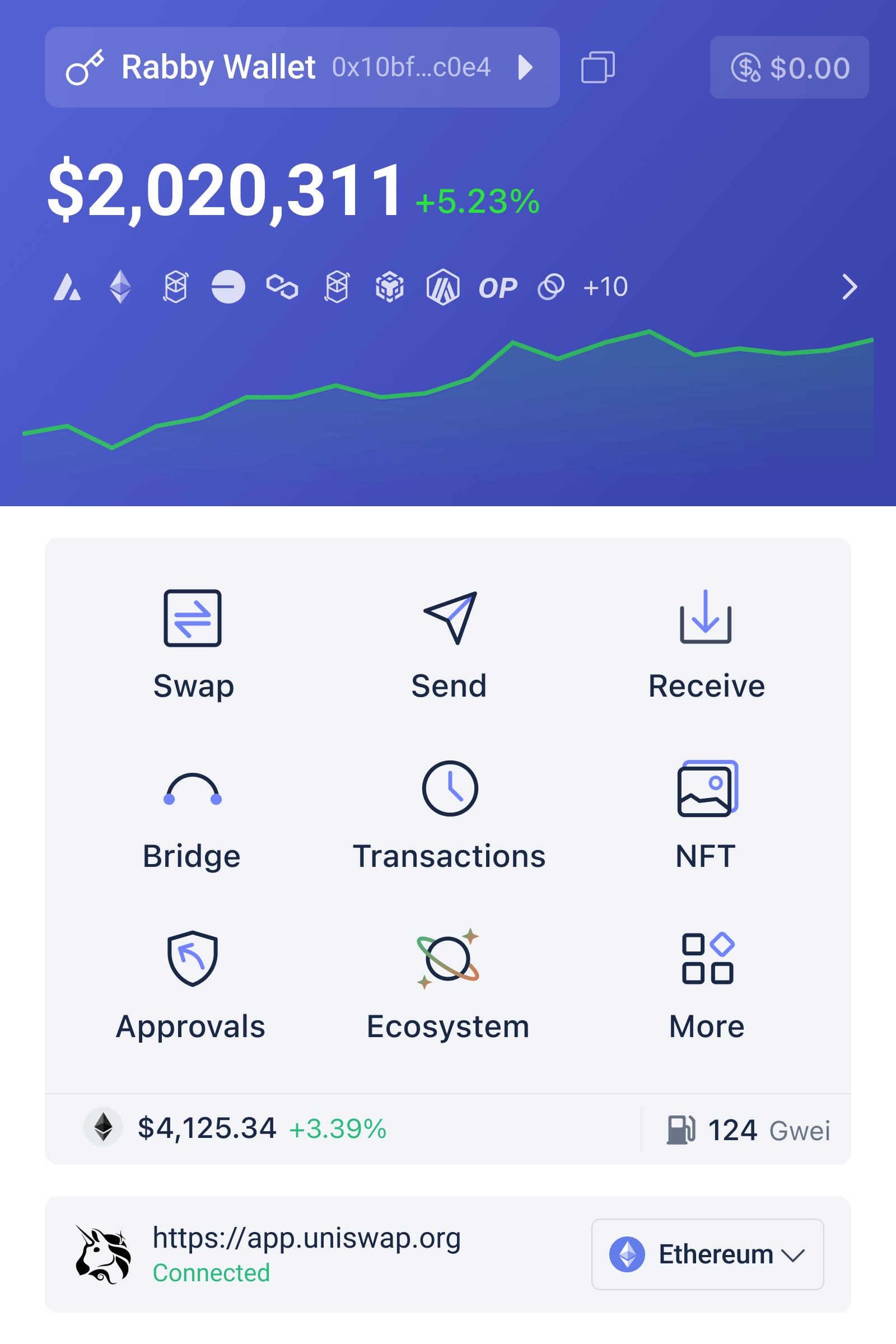
For someone installing the rabby extension, the useful mental model is a second pair of eyes, not an automated security certificate. The extension can improve the review process by making transaction details more legible and by helping users notice inconsistencies that a generic signing prompt may obscure. The user still has to verify the application, the intended asset, the destination network, and the economic terms.
Why cross-chain swaps multiply the review problem
A cross-chain swap is not one universal operation. It may involve a native bridge, a liquidity network, a messaging protocol, an exchange-like intermediary, or a combination of contracts. In one design, an asset is locked on the source chain and represented on another. In another, liquidity providers pay out an equivalent asset on the destination chain while a separate settlement process reconciles the transfer. These mechanisms can feel identical from the user interface, but their trust assumptions differ substantially.
The non-obvious risk is that “cross-chain” describes the user’s objective, not the security architecture. A route can expose the user to smart-contract risk on both chains, bridge or messaging risk between them, liquidity risk at the destination, and interface risk in the application that assembles the transaction. If the source-chain approval is unlimited, the danger may persist after the swap is complete. If the destination token is a wrapped representation, its value may depend on the system that maintains the representation. If finality is slower or probabilistic, a displayed completion status may not mean the same thing on every network.
This also explains why a cheaper route is not automatically a safer route. Fees, slippage, speed, liquidity depth, and trust assumptions are separate variables. A route with low quoted cost may rely on a newer contract, thinner liquidity, or a more complex sequence of calls. Conversely, a more established route can still be unsuitable if the user has misunderstood the token being received or has granted an unnecessarily broad approval.
The approval that outlives the swap
Token approvals deserve special attention because they are often confused with the swap itself. An approval gives a contract permission to move a specified token from the user’s address, subject to the allowance. The subsequent swap is a different transaction. If an allowance is left in place, the contract may retain that permission until it is reduced or revoked. The practical lesson is not that every approval is unacceptable; repeated revocation can create additional fees and operational complexity. The better question is whether the allowance is proportionate to the intended activity and whether the contract is one the user deliberately trusts.
For high-value positions, a measured approach may include using a separate wallet for experimental applications, limiting approvals where practical, and checking the post-swap allowance rather than assuming the process ended when the asset arrived. Hardware wallets can strengthen protection against remote key theft, but they do not make an intentionally approved malicious transaction safe. They protect the signing secret; they do not replace transaction comprehension.
What a disciplined review looks like in practice
Before signing, a user can treat the transaction as a small investigation. First, confirm the active network and the asset being spent. Similar symbols can represent different contracts, and a familiar ticker alone is not reliable identification. Next, inspect the recipient or contract address and ask whether it matches the application and operation being used. Then distinguish an approval from a transfer or swap. Finally, review the expected output, minimum received amount, fee, and deadline or execution conditions.
For a cross-chain operation, add two questions. What happens if the destination step fails or is delayed? And what asset will actually arrive: a native asset, a token issued by a bridge system, or a representation maintained by another protocol? These questions are not merely technical. They determine which party or mechanism bears the risk when conditions change.
Transaction warnings are most useful when they interrupt a plausible but incorrect story. A user may believe they are swapping one stablecoin for another, while the wallet sees a contract call involving an unfamiliar asset. They may think they are moving funds to a personal address, while the transaction sends tokens to a protocol contract. They may assume a destination chain has been selected, while the wallet is connected to a different network. Good security UX exposes these mismatches before authorization.
Still, warnings have limits. Automated systems can misclassify new contracts, lack complete context, or fail to detect a vulnerability that has not yet produced a recognizable pattern. A clean-looking simulation can also become stale if market prices, liquidity, or contract state changes between review and execution. The safest workflow therefore combines wallet-level analysis with independent habits: use bookmarked official applications, verify domains carefully, avoid signing unexpected messages, and keep only the funds needed for the immediate task in an actively connected wallet.
How the category evolved—and what matters now
Wallet security has moved through several stages. First came key generation and backup. Then came hardware isolation and stronger account recovery practices. As DeFi expanded, wallets began competing on transaction readability, network support, token discovery, simulation, and risk detection. This evolution reflects a broader truth: the main user failure is often not cryptographic theft but a mistaken authorization made under interface pressure.
That shift changes how wallets should be evaluated. The relevant question is not only whether an extension encrypts local data or supports hardware devices. Users should also ask whether it helps them understand contract calls, separates networks clearly, represents approvals accurately, and handles failed or pending cross-chain activity without creating false confidence. Convenience and security are not opposites here. Better information can make secure behavior easier. But more automation can also conceal complexity if the interface compresses several trust decisions into one attractive quote.
For US DeFi users, operational discipline is particularly important because tax reporting, account separation, and recordkeeping can become complicated when a transaction crosses networks and produces wrapped or substituted assets. A wallet may help display balances and activity, but it cannot determine the user’s legal or tax treatment. Transaction history should be preserved independently, especially when a route involves multiple contracts or delayed settlement.
What to watch as cross-chain wallets develop
The next meaningful improvements are likely to be judged by how well wallets communicate uncertainty. Users need clearer distinctions between a transaction that is simulated successfully, a bridge message that is still pending, and a destination transfer that has reached final settlement. They also need better explanations of who controls wrapped assets, how liquidity is supplied, and what happens during a pause or route failure.
One conditional scenario is especially important: if cross-chain applications continue hiding several protocol interactions behind a single button, wallet security tools will need to become more explanatory rather than merely more restrictive. If interfaces instead expose assumptions without overwhelming users, informed consent may improve. The evidence needed to assess that progress is practical: fewer unexplained approvals, clearer failure states, more accurate simulations, and a lower rate of users signing transactions whose effects differ from their stated intention.
The enduring principle is simple but easy to neglect. A wallet cannot eliminate the risks created by smart contracts, bridges, liquidity systems, or compromised websites. It can, however, make the decision boundary more visible. Before downloading an extension or approving a cross-chain swap, treat the wallet as an instrument for verification. The strongest security habit is not blind trust in a warning system; it is learning to ask what is being authorized, why it is necessary, and what remains true after the transaction appears complete.
Frequently asked questions
Does a secure wallet make cross-chain swaps safe?
No. A reputable wallet can improve visibility into networks, approvals, contract calls, and expected outcomes, but the underlying bridge, exchange route, smart contracts, liquidity, and website may still carry risk. Wallet security reduces some forms of error; it does not remove protocol or market risk.
Should every token approval be revoked after a swap?
Not necessarily. Revoking an approval can reduce future exposure, but it requires another transaction and may cost network fees. The decision depends on the contract, the allowance size, the value at risk, and whether the application will be used again. Review allowances deliberately rather than applying one rule to every situation.
What is the most important check before a cross-chain transaction?
Confirm the complete path: source network, asset and approval, destination network, receiving asset, expected amount, and the mechanism responsible for settlement. If any part of that path is unclear, pause before signing. Complexity is not proof of fraud, but unexplained complexity is a reason to investigate.