Casino en línea en Argentina: cómo elegir plataformas confiables

El casino en línea se convirtió en una de las opciones de entretenimiento digital más elegidas en Argentina. Antes había que viajar a un establecimiento físico; ahora alcanza con un teléfono móvil o una computadora. Tragamonedas, ruleta, blackjack y mesas en vivo están disponibles las veinticuatro horas. En paralelo, también crecieron las páginas sin licencia y las promesas engañosas. Por eso, la elección de la plataforma determina si la experiencia es segura o termina en un dolor de cabeza.

Comparar fuentes y leer opiniones de otros usuarios ayuda a separar la realidad de la publicidad. Un nombre que circula entre jugadores locales es bizzo casino dinero real, pero los términos deben leerse con calma antes de invertir. Un casino en línea responsable explica cómo funciona la cuenta, qué documentación pide y cómo llegar al soporte en español.

Qué define a un casino en línea confiable

La confianza se construye con acciones concretas: programa de juego responsable, condiciones claras y atención directa. Un operador que no muestra chat en vivo ni teléfono suele relegar el soporte. También hay que mirar el proceso de verificación de identidad. Los casinos que inician el KYC apenas creás la cuenta demuestran que tienen controles. Los que esperan al momento del retiro para pedir documentos generan pérdidas de tiempo.

El catálogo de juegos también aporta una pista. Los grandes proveedores de software garantizan que las tragamonedas y las mesas usan generadores de números aleatorios auditados. Si el sitio presenta títulos genéricos sin marca, es difícil verificar la transparencia. Una buena selección de ruleta, blackjack y apuestas en vivo suele acompañar a operadores establecidos en el mercado.

Licencias y regulaciones que se aplican en Argentina

La regulación del juego online en la Argentina es provincial. La Ciudad de Buenos Aires otorga permisos mediante la Lotería de la Ciudad, y otras jurisdicciones tienen sus propios organismos, como el Instituto Provincial de Lotería y Casinos. Un casino que quiere operar de manera legal muestra esa licencia en el pie de su página. Si no aparece ningún sello, conviene desconfiar.

Hay operadores que funcionan desde otras regiones con licencias internacionales, como Malta o Curazao. Pueden aceptar jugadores de Argentina, pero no responden ante las autoridades locales. Por eso conviene verificar la reputación en foros, redes y sitios de reseñas. Para revisar cómo presentan sus ofertas y métodos de pago algunas plataformas orientadas al público local, Visita este sitio web.

Depósitos, retiros y monedas disponibles

Los métodos de pago definen la experiencia diaria. En Argentina, las billeteras virtuales se usan para cargar saldo en pesos al instante. Las tarjetas de débito y crédito siguen siendo una alternativa frecuente, aunque algunos bancos bloquean gastos vinculados con apuestas. Otras plataformas suman transferencias y criptomonedas para usuarios que prefieren no exponer datos bancarios.

Criterio Billeteras virtuales Tarjetas bancarias
Depósito Acreditación inmediata Acreditación inmediata
Retiro 24–72 horas hábiles De 3 a 7 días hábiles
Comisiones Bajas o sin cargo extra Pueden agregar costo financiero
Límites Flexibles para montos menores Sujetos al límite del banco

En la práctica, las billeteras virtuales acreditan retiros en 24 o 72 horas hábiles, siempre que la cuenta esté verificada. Las tarjetas tardan más porque interviene el banco. Si el operador ofrece un único medio de pago dificultoso, el problema aparecerá cuando quieras cobrar.

Bonos y promociones sin trampas ocultas

Los bonos de bienvenida son el recurso de marketing preferido por los casinos online. Aparecen como porcentaje extra sobre el primer depósito o como giros gratis en tragamonedas determinadas. La letra chica define si conviene. En muchos casos, los requisitos de apuesta van de 15 a 50 veces el valor del bono, y no todos los juegos aportan igual al cumplimiento. También existen topes de retiro sobre las ganancias obtenidas con el crédito promocional.

Un bono alto no representa un beneficio real si las condiciones son absurdas. La mejor estrategia es calcular cuánto hay que apostar antes de retirar y comparar con otras ofertas. Las promociones modestas con requisitos bajos suelen generar ganancias más fáciles de cobrar.

Juegos en vivo y experiencia móvil

El casino en línea actual combina tragamonedas clásicas, ruleta en vivo, blackjack y póker con crupieres reales. El juego en directo replica el clima de una sala física, pero desde cualquier barrio de Buenos Aires, Rosario o Córdoba. La transmisión fluida y el chat con el dealer marcan la calidad. Probar la versión demo ayuda a conocer las reglas sin arriesgar dinero.

La experiencia móvil es decisiva. Muchos usuarios juegan en el celular durante viajes en subte o en pausas del trabajo. Si la plataforma demora en cargar, la app se cierra o el botón de depósito no responde, difícilmente se convierta en una opción habitual. Un buen casino online debe acompañar el ritmo de la rutina urbana.

Consejos prácticos para apostar con responsabilidad

Jugar con dinero real en un casino en línea debe ser un pasatiempo planificado. Establecer un presupuesto fijo es la base. Usar solo fondos que no comprometan los gastos del hogar y avisar a un familiar son medidas simples que reducen el riesgo de caer en una conducta compulsiva. Los especialistas en adicciones recomiendan no mezclar el juego con estados emocionales extremos y revisar periódicamente los movimientos de la cuenta.

Los sitios licenciados ofrecen herramientas de juego responsable, como límites de depósito, alertas de tiempo y autoexclusión temporal. Activarlas antes de la primera jugada es una señal de madurez. Si el operador no brinda esas opciones, lo mejor es cerrar la sesión y elegir otra plataforma.

Pasos recomendados para no perder el control

  • Definí un presupuesto mensual para juego y no lo superes.
  • Usá solo métodos de pago que conozcas y evitá dejar saldo disponible en la web.
  • Activá límites de depósito y recordatorios de tiempo antes de empezar.
  • Jugá únicamente en sitios con licencia visible y aptos para mayores de 18 años.
  • Si el juego dejó de ser diversión, pedí ayuda a un servicio especializado.

Wallet Security After the Swap: Why Cross-Chain Risk Begins Before You Click Confirm

A common misconception is that a crypto wallet is secure if its private key remains secret. That is necessary, but it is not sufficient. A user can protect a seed phrase perfectly and still approve a harmful transaction, interact with the wrong contract, or misunderstand what a cross-chain swap is actually asking the wallet to do. In modern DeFi, security is less like guarding a key in a vault and more like reviewing a sequence of permissions, messages, and settlement steps.

Consider a familiar US user scenario. An investor holds an asset on one network, wants exposure to another, and opens a decentralized application through a browser wallet. The interface presents a convenient route: approve the token, sign a transaction, wait for the bridge or liquidity system to complete its work, and receive the destination asset. Nothing about that sequence necessarily looks dangerous. Yet each stage introduces a different failure mode. The central question is not simply, “Is this wallet safe?” It is, “What exactly is the wallet authorizing, on which network, through which contract, and with what ability to reverse the decision?”

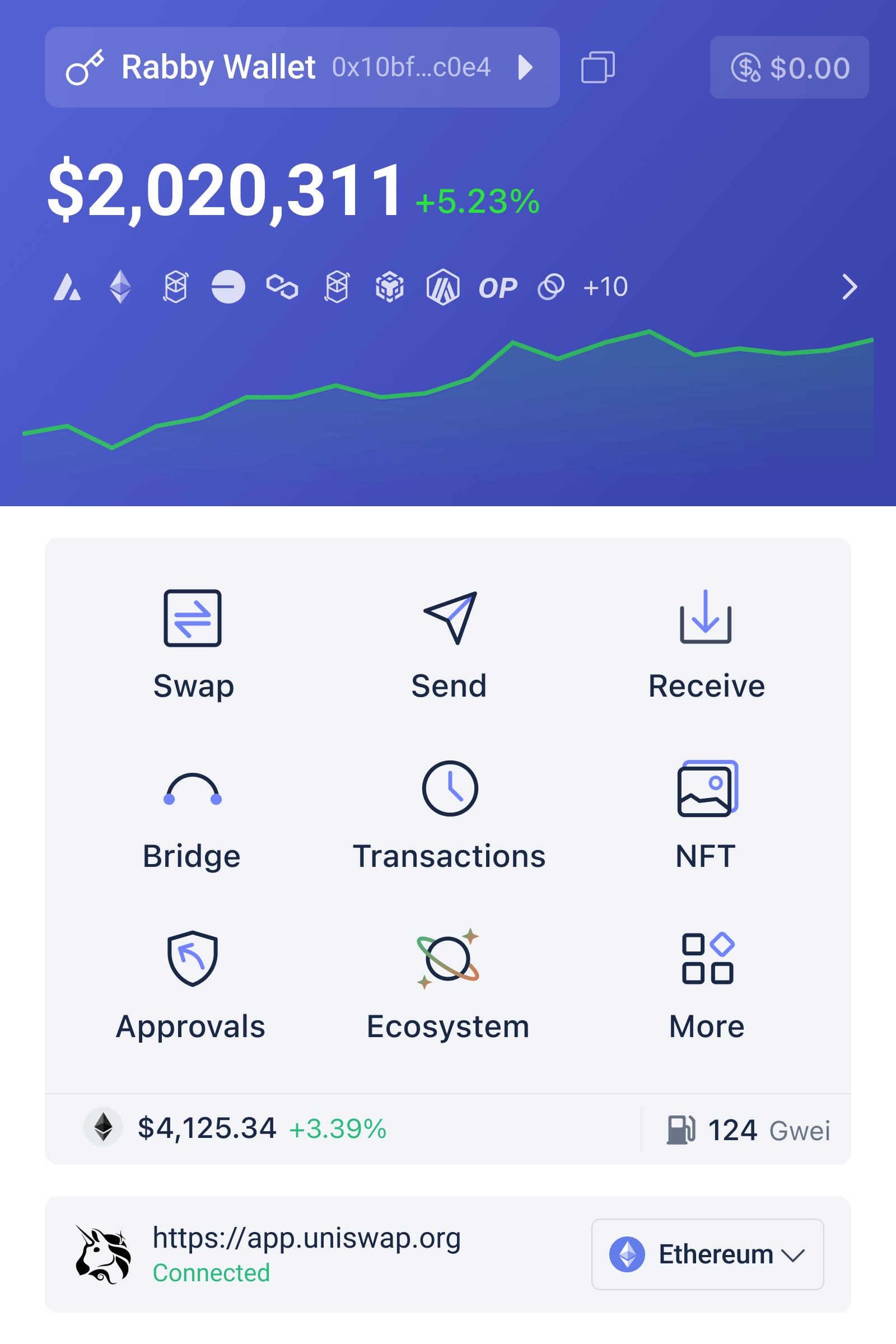
Browser wallet interface illustrating transaction review across decentralized finance networks

From key storage to transaction interpretation

Early cryptocurrency wallets were often understood primarily as key managers. Their essential job was to generate addresses, store or access signing credentials, and broadcast transactions. That model remains important, but DeFi changed the practical security problem. Smart contracts can request token approvals, execute trades, lock collateral, mint assets, or call other contracts. The wallet is therefore not merely signing a payment; it may be signing a structured instruction whose consequences depend on code, state, and market conditions.

This is where transaction simulation and readable warnings become valuable. A security-oriented wallet can help users inspect the likely outcome of a transaction before signing, identify the network involved, and surface potentially risky contract behavior. Such tools do not prove that a transaction is safe. They reduce ambiguity. That distinction matters: a simulation is an informed preview of what may happen under current conditions, not a guarantee against every future state change, oracle failure, compromised front end, or malicious contract design.

For someone installing the rabby extension, the useful mental model is a second pair of eyes, not an automated security certificate. The extension can improve the review process by making transaction details more legible and by helping users notice inconsistencies that a generic signing prompt may obscure. The user still has to verify the application, the intended asset, the destination network, and the economic terms.

Why cross-chain swaps multiply the review problem

A cross-chain swap is not one universal operation. It may involve a native bridge, a liquidity network, a messaging protocol, an exchange-like intermediary, or a combination of contracts. In one design, an asset is locked on the source chain and represented on another. In another, liquidity providers pay out an equivalent asset on the destination chain while a separate settlement process reconciles the transfer. These mechanisms can feel identical from the user interface, but their trust assumptions differ substantially.

The non-obvious risk is that “cross-chain” describes the user’s objective, not the security architecture. A route can expose the user to smart-contract risk on both chains, bridge or messaging risk between them, liquidity risk at the destination, and interface risk in the application that assembles the transaction. If the source-chain approval is unlimited, the danger may persist after the swap is complete. If the destination token is a wrapped representation, its value may depend on the system that maintains the representation. If finality is slower or probabilistic, a displayed completion status may not mean the same thing on every network.

This also explains why a cheaper route is not automatically a safer route. Fees, slippage, speed, liquidity depth, and trust assumptions are separate variables. A route with low quoted cost may rely on a newer contract, thinner liquidity, or a more complex sequence of calls. Conversely, a more established route can still be unsuitable if the user has misunderstood the token being received or has granted an unnecessarily broad approval.

The approval that outlives the swap

Token approvals deserve special attention because they are often confused with the swap itself. An approval gives a contract permission to move a specified token from the user’s address, subject to the allowance. The subsequent swap is a different transaction. If an allowance is left in place, the contract may retain that permission until it is reduced or revoked. The practical lesson is not that every approval is unacceptable; repeated revocation can create additional fees and operational complexity. The better question is whether the allowance is proportionate to the intended activity and whether the contract is one the user deliberately trusts.

For high-value positions, a measured approach may include using a separate wallet for experimental applications, limiting approvals where practical, and checking the post-swap allowance rather than assuming the process ended when the asset arrived. Hardware wallets can strengthen protection against remote key theft, but they do not make an intentionally approved malicious transaction safe. They protect the signing secret; they do not replace transaction comprehension.

What a disciplined review looks like in practice

Before signing, a user can treat the transaction as a small investigation. First, confirm the active network and the asset being spent. Similar symbols can represent different contracts, and a familiar ticker alone is not reliable identification. Next, inspect the recipient or contract address and ask whether it matches the application and operation being used. Then distinguish an approval from a transfer or swap. Finally, review the expected output, minimum received amount, fee, and deadline or execution conditions.

For a cross-chain operation, add two questions. What happens if the destination step fails or is delayed? And what asset will actually arrive: a native asset, a token issued by a bridge system, or a representation maintained by another protocol? These questions are not merely technical. They determine which party or mechanism bears the risk when conditions change.

Transaction warnings are most useful when they interrupt a plausible but incorrect story. A user may believe they are swapping one stablecoin for another, while the wallet sees a contract call involving an unfamiliar asset. They may think they are moving funds to a personal address, while the transaction sends tokens to a protocol contract. They may assume a destination chain has been selected, while the wallet is connected to a different network. Good security UX exposes these mismatches before authorization.

Still, warnings have limits. Automated systems can misclassify new contracts, lack complete context, or fail to detect a vulnerability that has not yet produced a recognizable pattern. A clean-looking simulation can also become stale if market prices, liquidity, or contract state changes between review and execution. The safest workflow therefore combines wallet-level analysis with independent habits: use bookmarked official applications, verify domains carefully, avoid signing unexpected messages, and keep only the funds needed for the immediate task in an actively connected wallet.

How the category evolved—and what matters now

Wallet security has moved through several stages. First came key generation and backup. Then came hardware isolation and stronger account recovery practices. As DeFi expanded, wallets began competing on transaction readability, network support, token discovery, simulation, and risk detection. This evolution reflects a broader truth: the main user failure is often not cryptographic theft but a mistaken authorization made under interface pressure.

That shift changes how wallets should be evaluated. The relevant question is not only whether an extension encrypts local data or supports hardware devices. Users should also ask whether it helps them understand contract calls, separates networks clearly, represents approvals accurately, and handles failed or pending cross-chain activity without creating false confidence. Convenience and security are not opposites here. Better information can make secure behavior easier. But more automation can also conceal complexity if the interface compresses several trust decisions into one attractive quote.

For US DeFi users, operational discipline is particularly important because tax reporting, account separation, and recordkeeping can become complicated when a transaction crosses networks and produces wrapped or substituted assets. A wallet may help display balances and activity, but it cannot determine the user’s legal or tax treatment. Transaction history should be preserved independently, especially when a route involves multiple contracts or delayed settlement.

What to watch as cross-chain wallets develop

The next meaningful improvements are likely to be judged by how well wallets communicate uncertainty. Users need clearer distinctions between a transaction that is simulated successfully, a bridge message that is still pending, and a destination transfer that has reached final settlement. They also need better explanations of who controls wrapped assets, how liquidity is supplied, and what happens during a pause or route failure.

One conditional scenario is especially important: if cross-chain applications continue hiding several protocol interactions behind a single button, wallet security tools will need to become more explanatory rather than merely more restrictive. If interfaces instead expose assumptions without overwhelming users, informed consent may improve. The evidence needed to assess that progress is practical: fewer unexplained approvals, clearer failure states, more accurate simulations, and a lower rate of users signing transactions whose effects differ from their stated intention.

The enduring principle is simple but easy to neglect. A wallet cannot eliminate the risks created by smart contracts, bridges, liquidity systems, or compromised websites. It can, however, make the decision boundary more visible. Before downloading an extension or approving a cross-chain swap, treat the wallet as an instrument for verification. The strongest security habit is not blind trust in a warning system; it is learning to ask what is being authorized, why it is necessary, and what remains true after the transaction appears complete.

Frequently asked questions

Does a secure wallet make cross-chain swaps safe?

No. A reputable wallet can improve visibility into networks, approvals, contract calls, and expected outcomes, but the underlying bridge, exchange route, smart contracts, liquidity, and website may still carry risk. Wallet security reduces some forms of error; it does not remove protocol or market risk.

Should every token approval be revoked after a swap?

Not necessarily. Revoking an approval can reduce future exposure, but it requires another transaction and may cost network fees. The decision depends on the contract, the allowance size, the value at risk, and whether the application will be used again. Review allowances deliberately rather than applying one rule to every situation.

What is the most important check before a cross-chain transaction?

Confirm the complete path: source network, asset and approval, destination network, receiving asset, expected amount, and the mechanism responsible for settlement. If any part of that path is unclear, pause before signing. Complexity is not proof of fraud, but unexplained complexity is a reason to investigate.

Hyperliquid Trading: Does a Fast Perpetuals DEX Deserve the Hype?

The counterintuitive fact about Hyperliquid is that its most important innovation may not be leverage, speed, or even its growing market menu. It is the attempt to make an on-chain order book behave like a professional centralized exchange while preserving transparent settlement. That is a difficult design problem: traders want immediate execution, deep liquidity, predictable liquidations, and advanced orders, but decentralized systems must also expose enough of their machinery to be verifiable. Hyperliquid’s current proposition is therefore less “crypto trading without intermediaries” than a specific compromise between exchange performance and blockchain accountability.

Recent project messaging describes more than 300 perpetual and spot markets, including crypto, commodities, and indices, available around the clock through a non-custodial, fully on-chain venue. For US traders, that broadens the practical question. The issue is not simply whether Hyperliquid can attract attention during a speculative cycle. It is whether its architecture, liquidity model, and risk controls make it a sensible venue for a particular trading task—and where the apparent advantages stop.

Hyperliquid trading interface symbol representing transparent on-chain perpetuals infrastructure

From automated market makers to an on-chain order book

DeFi trading did not begin with order books. Early decentralized exchanges largely used automated market makers, or AMMs, in which liquidity sits in a formula-defined pool rather than behind individual bids and offers. AMMs are powerful because they are comparatively simple to deploy and composable with other smart contracts. Their weakness is that execution can become expensive or inefficient for highly active strategies, especially when price impact and liquidity concentration matter.

Centralized exchanges solved many of those problems with matching engines, limit orders, market-making firms, and rapid internal accounting. The trade-off was custody: users generally deposit assets with an operator and rely on that operator’s systems, controls, and solvency. Hyperliquid’s fully on-chain central limit order book, or CLOB, takes a different route. Orders, trades, funding, and liquidations are recorded through the platform’s custom Layer 1 rather than being matched entirely off-chain and settled later.

This distinction matters because transparency is not the same as decentralization in the abstract. A trader can inspect on-chain activity, but still needs to understand how the chain orders transactions, how liquidity is supplied, how liquidations are executed, and what happens during abnormal volatility. Hyperliquid’s custom chain is optimized for trading, with stated block times of 0.07 seconds and capacity of up to 200,000 transactions per second. Those figures describe system capability, not a guarantee that every market will always have deep liquidity or that every user will receive an ideal fill.

Hyperliquid versus a conventional centralized exchange

The cleanest comparison is not “DEX good, CEX bad.” It is a comparison of control surfaces. On a centralized exchange, the operator controls custody, matching infrastructure, account permissions, and often the presentation of risk data. On Hyperliquid, custody is designed to remain non-custodial and core trading events are visible on-chain. That can reduce dependence on a single custodian, but it does not remove operational risk. Users still face wallet security, smart-contract and protocol risk, chain availability risk, and the possibility that market conditions behave differently from a displayed interface.

Hyperliquid also tries to narrow the usability gap. Traders can use market and limit orders, including GTC, IOC, and FOK instructions, as well as TWAP and scale orders. Stop-loss and take-profit triggers are available for more structured execution. These tools are not cosmetic. A perpetuals trader who uses leverage needs a method for controlling entry, exit, and exposure when attention is divided or markets move faster than manual clicks allow.

Yet advanced order types do not make a strategy safe. A stop trigger is not necessarily a guaranteed execution price, particularly during a rapid gap or thin liquidity event. A TWAP can reduce timing concentration, but it may also continue trading while the market regime changes. The correct comparison is therefore between execution frameworks, not feature checklists: centralized venues may offer familiar depth and mature operational processes, while an on-chain CLOB offers auditability and self-directed settlement with its own technical dependencies.

Margin is a portfolio decision, not merely a leverage setting

Hyperliquid supports leverage of up to 50x and offers both cross and isolated margin. Cross margin allows collateral to support multiple positions at once. That can use capital efficiently, but a losing position may consume collateral intended to protect other trades. Isolated margin assigns collateral to a specific position, making the maximum planned loss easier to compartmentalize, although the isolated position can be liquidated while unused capital sits elsewhere.

The non-obvious risk is that leverage changes the speed at which a trader loses optionality. At high leverage, a relatively small adverse move can threaten the maintenance-margin threshold. Funding payments, fees, mark-price behavior, and liquidation mechanics then matter as much as the direction of the underlying asset. In practice, “up to 50x” is better interpreted as an upper boundary of the risk system than as a reasonable default.

A reusable framework is to separate three questions. First, how much notional exposure is desired? Second, how much account equity may be lost if the thesis fails? Third, which collateral should be exposed to that position? Isolated margin can help answer the third question, but it cannot compensate for excessive notional size. Cross margin can reduce unnecessary liquidation from one small position, yet it can also turn several individually tolerable losses into one account-level event.

Why the Hyperliquid hype has a mechanism behind it—and a ceiling

The platform’s appeal is partly explained by incentives. Trading is described as having zero gas fees, with maker rebates and competitive taker fees intended to encourage liquidity. Liquidity is supplied through user-deposited vaults, including LP, market-making, and liquidation vaults. The project also describes a community-oriented model in which fees flow back into the ecosystem through liquidity providers, deployers, and token buybacks rather than being structured primarily around venture-capital ownership.

Those incentives can support a useful network effect: more liquidity can improve execution, better execution can attract more volume, and more volume can make market-making activity economically viable. But incentives are not identical to organic liquidity. A vault provider accepts market, liquidation, and smart-contract risks in exchange for potential returns. If volatility changes or incentives weaken, the depth available to traders may change as well. Traders should evaluate the actual spread, order-book depth, and expected slippage for the instrument and size they intend to trade—not infer them from headline throughput.

Hyperliquid’s architecture also claims sub-second finality and elimination of miner extractable value, commonly called MEV. The important concept is ordering fairness: if a separate block producer cannot profitably insert, reorder, or censor transactions around a visible user order, one source of execution uncertainty is reduced. That does not eliminate every form of adverse selection. Markets can still move before an order is matched, sophisticated participants can still compete on information and latency, and liquidation cascades can still worsen fills. “No MEV” should be read as a narrower architectural claim, not a promise of frictionless execution.

Programmability changes who the platform is for

Hyperliquid is not only a manual trading interface. Developers can use a Go SDK, an Info API with more than 60 methods, an EVM API based on familiar JSON-RPC conventions, and WebSocket or gRPC streams for order-book updates, user events, and funding payments. This matters to systematic traders because strategy quality depends on data timing, position-state accuracy, and reliable order handling—not simply on having an attractive chart.

The ecosystem’s support for HyperLiquid Claw, a Rust-built AI trading bot using a Message Control Protocol server, reflects a broader shift from decentralized exchanges as places to click toward programmable execution environments. The opportunity is clear: software can scan momentum signals, monitor funding, and execute predefined rules. The limitation is equally clear: automation scales errors as efficiently as it scales good decisions. An AI-assisted system can act on noisy signals, misread regime changes, or amplify a flawed risk limit. Any automated deployment should be tested with small exposure, explicit maximum-loss rules, and independent monitoring.

The roadmap’s HypereVM concept could become important if external DeFi applications can compose with Hyperliquid’s native liquidity. If that integration works as intended, perpetuals liquidity might become a building block for lending, structured products, collateral management, or other applications. The conditional phrase matters. Composability introduces additional contracts, dependencies, and failure modes. More integration can increase utility, but it can also make a local trading incident propagate into connected protocols.

A practical comparison for US traders

For a trader choosing between Hyperliquid, a centralized exchange, and an AMM-based perpetuals venue, the best fit depends on the task. Hyperliquid is most compelling when transparent on-chain activity, non-custodial design, an order-book workflow, and programmatic access are central requirements. A centralized exchange may remain preferable for users who prioritize established customer operations, familiar account recovery, or a particular fiat and compliance workflow. An AMM-based venue may be useful where permissionless liquidity and composability matter more than precise order-book execution.

Before trading, inspect the specific market rather than the platform’s aggregate claims. Consider spread, depth near the intended price, funding direction and variability, collateral rules, liquidation distance, oracle or mark-price behavior, and the consequences of a chain or wallet interruption. For US participants, tax records and jurisdiction-specific obligations also deserve attention; decentralized access does not make reporting responsibilities disappear. The practical discipline is simple but unfashionable: size the position from the liquidation and loss scenario backward, not from the maximum leverage displayed by the interface.

What to watch next

The most informative signals will be operational rather than rhetorical. Watch whether the expanding market set maintains usable depth across normal and stressed conditions. Observe how vault liquidity behaves when volatility rises, whether API and streaming tools remain dependable for automated traders, and whether HypereVM adds genuine composability without importing disproportionate contract risk. It is also worth distinguishing stated network capacity from experienced execution quality in the markets that matter to a given strategy.

If those conditions hold, Hyperliquid could strengthen the case that a specialized blockchain can deliver exchange-like performance without hiding the settlement layer. If they do not, the platform may still be technically impressive while offering less practical protection than its speed and transparency suggest. Readers seeking a concise starting point for the platform’s trading model can review https://sites.google.com/cryptowalletextensionus.com/hyperliquid/, then verify live market conditions independently before committing funds.

Frequently asked questions

Is Hyperliquid genuinely decentralized?

It is designed as a non-custodial, fully on-chain perpetuals exchange, with orders, trades, funding, and liquidations processed through a custom Layer 1. That is meaningful decentralization in settlement and transparency, but it does not mean every risk is distributed equally. Users remain exposed to protocol design, chain operation, wallet security, liquidity, and governance-related risks.

Does zero gas mean trading is free?

No. The platform is described as charging zero gas fees for trading, but traders can still face taker fees, funding payments, spread, slippage, and losses from adverse price movement. The relevant cost is total execution cost, not one fee category in isolation.

Should beginners use 50x leverage?

Generally, no. Maximum leverage is a system feature, not a risk recommendation. Beginners should first understand liquidation thresholds, funding, order execution, and the difference between cross and isolated margin. Small notional exposure and conservative leverage provide more room to learn than a highly leveraged position.

Phantom Wallet on Chromebook: Linux Container Setup and Browser Extension Limitations

A Chromebook user who wants to access Solana’s DeFi ecosystem faces a specific constraint: Chrome OS is not a traditional Linux desktop environment, even when Developer Mode enables a Linux container. Phantom Wallet is a non-custodial browser extension designed for Solana, offering direct access to decentralized exchanges, NFT marketplaces, and token swapping without intermediaries. The wallet’s architecture relies on a conventional browser extension model, which functions on Chrome, Firefox, Brave, and Edge—but on a Chromebook, the installation process and practical usability depend on whether the user runs the extension in the Chrome OS native browser or within a containerized Linux environment.

The question is not whether Phantom Wallet can run on a Chromebook in theory. It is whether the specific setup—network isolation, browser container compatibility, seed phrase security in a constrained environment, and access to the underlying blockchain—creates acceptable trade-offs for managing real Solana assets. A Chromebook is fundamentally designed as a stateless, cloud-centric device. Adding a non-custodial wallet that holds cryptographic keys introduces tensions between that design philosophy and the security model required for self-custody.

Phantom Wallet browser extension interface showing token balance, transaction history, and DeFi protocol connection status on a Chrome OS device

Native Chrome OS browser extension installation

The most straightforward path is installing Phantom directly into Chrome OS’s built-in browser. Chrome OS runs Chromium and supports the Chrome Web Store, which means the Chrome extension installation process is identical to any other Chromebook user’s workflow. Visit the Chrome Web Store, search for Phantom, and click “Add to Chrome.” The extension integrates into the browser toolbar, displaying a wallet icon that opens the Phantom interface when clicked. This approach avoids the complexity of Linux containers entirely and leverages the operating system’s native security sandbox.

The advantage of native installation is simplicity. The extension has direct access to the browser’s cryptographic APIs, does not depend on Linux-specific drivers or libraries, and benefits from Chrome OS’s automatic updates. The browser itself is hardened by design: Chrome OS isolates the browser from the underlying operating system, enforces code signing, and restarts the browser automatically. For a wallet that stores only the encrypted seed phrase locally and relies on the extension to sign transactions, this isolation can be valuable.

However, native Chrome OS installation also means dependency on a single browser instance. If the browser crashes, updates unexpectedly, or requires a restart, the wallet interface closes. Unlike a desktop Linux installation where a Firefox window might remain open while Chrome updates in the background, Chromebook users cannot easily maintain multiple browser windows with different security profiles or isolate the wallet to a dedicated browser instance. The wallet’s security depends entirely on that one browser environment remaining intact and uncompromised.

Before installing, verify that you are downloading from the official Chrome Web Store and not from an alternative source. The real Phantom extension download link comes from a verified publisher. Phishing and malicious extensions do exist; they may appear identical to the genuine Phantom Wallet but are designed to steal seed phrases or intercept transactions. Check the publisher’s name, review count, and ratings carefully. Once installed, the extension requests permission to “read and change all your data on websites you visit”—a broad permission necessary for the wallet to sign transactions on Solana DeFi protocols but one that underscores why browser security matters.

Linux container deployment and its practical limits

Chrome OS Developer Mode enables a Linux (Crostini) container where a user can install a traditional Linux environment, including additional browsers such as Firefox. This presents a second installation path: create a Debian-based Linux container, install Firefox or another browser that supports extensions, then install Phantom. In principle, this isolates the wallet to a containerized environment rather than the native Chrome OS browser, which some users perceive as additional security separation.

The Linux container on Chromebook is not a virtual machine in the traditional sense. It is a lightweight sandbox based on Linux kernel namespacing and cgroups, running on the same machine as the Chrome OS host. The container has its own filesystem and network namespace, but it shares the same physical hardware and kernel. Phantom installed inside the container can access the container’s network connection, which routes through the Chromebook’s system network interface. The wallet receives its own IP address from the container’s virtual network, but outbound Solana blockchain connections originate from the same Chromebook.

This setup creates an incomplete isolation boundary. If the container is compromised—through a malicious browser extension, a vulnerability in Firefox, or malware that escapes the container—an attacker gains access to the wallet’s encrypted key material and the local environment where it operates. The separation from Chrome OS itself is genuine but does not add a second cryptographic verification step or dramatically change the threat model for seed phrase theft. The real benefit is organizational: keeping wallet-related browser activity in one container and general browsing in another reduces the attack surface compared to using the native Chrome OS browser for both purposes.

Network-level concerns also apply. The Linux container’s network traffic is still subject to any network monitoring or filtering rules applied at the Chromebook level. If the device connects through a workplace network, school network, or captive portal, those entities may observe or intercept container traffic. The container itself does not encrypt outbound connections; that responsibility falls to the applications inside it. Phantom does not force all traffic through Tor or I2P, so blockchain queries and transaction broadcasts may be observable to the local network.

Hardware wallet integration and the Chromebook constraint

Phantom supports hardware wallets including Ledger Nano S Plus and Trezor devices, which can add a critical security layer by keeping private keys offline and requiring physical confirmation for transactions. On a traditional desktop, connecting a Ledger device via USB and enabling hardware wallet mode in Phantom is straightforward. On a Chromebook, the situation is more complex because Chromebook’s hardware access model is restrictive.

Chrome OS provides limited USB device access to the web browser and extensions. Chrome has native support for certain hardware, including some Ledger devices, through the WebUSB specification. However, this support depends on the extension being granted explicit permission and the hardware device being recognized by the system. If you attempt to use a Ledger Nano with Phantom on Chrome OS, the extension must detect the device through the USB API, and the browser must have permission to access it. This works in many cases, but not universally; older devices or certain configurations may not be recognized.

The Linux container presents an additional challenge. A USB device connected to a Chromebook is visible to the container only if it is explicitly forwarded through Crostini’s device access mechanism. This requires additional configuration steps and is not guaranteed to work with all hardware wallet firmware versions. If you are planning to use Phantom with a hardware wallet on a Chromebook, testing the connection with a small amount before transferring significant assets is essential. The official documentation and community forums often contain specific workarounds for particular device and container combinations, which suggests that this setup is neither fully tested nor universally reliable.

The practical implication is that a Chromebook user seeking the security benefits of a hardware wallet faces a choice: use the native Chrome OS browser and hope that WebUSB support works for their specific device, or attempt the more complex container setup and potentially encounter driver issues. For users who cannot avoid this constraint, keeping significant asset balances on the hardware wallet itself and using Phantom only for small transaction amounts or read-only monitoring may be a safer approach than expecting seamless hardware integration.

Seed phrase security in a cloud-centric environment

Phantom generates or imports a seed phrase—a sequence of 12 or 24 words that cryptographically represents all the private keys in a wallet. On a traditional personal computer, protecting this seed phrase is a local responsibility: write it down, store it securely offline, do not take screenshots, do not store it in cloud services. On a Chromebook, the security model is different because Chromebooks are designed to synchronize user data to Google Account and cloud storage by default.

When you set up a Chromebook, you log in with a Google Account. By default, browsing history, passwords, extensions, and settings sync to your Google Account. The seed phrase itself is never automatically synced because Phantom stores it locally in the browser’s storage area, which is encrypted at rest on the Chromebook’s solid-state drive. However, the act of managing a recovery seed on a device designed for cloud synchronization creates cognitive friction. Users accustomed to having everything back up automatically may be tempted to write the seed phrase into Google Keep, Google Drive, or another cloud service “for safety,” which would then defeat the entire benefit of non-custodial self-custody.

If a Chromebook is lost or stolen, the attacker does not automatically have access to the wallet because Chrome OS encrypts local storage and requires the account password to unlock the device. However, if the attacker can access the device before encryption is triggered, or if they have access to your Google Account, they may be able to recover data. The security depends on the strength of your account password, whether you have enabled two-factor authentication, and whether the device had time to encrypt or wipe itself.

A safer approach for valuable assets is to use the official Phantom Wallet site to set up the wallet on a more traditional device—a Windows or Linux computer, or a dedicated hardware wallet—and then use the Chromebook only as a read-only monitoring interface or for small transactions using a separate Phantom installation. This separates the seed phrase creation and backup process from the cloud-integrated Chromebook environment and reduces the risk of accidental exposure.

DeFi protocol access and network reliability on Chromebook

Phantom’s primary utility is connecting to Solana DeFi protocols such as Raydium, Orca, and Jupiter, as well as NFT marketplaces like Magic Eden. These connections are initiated through the browser when you visit a protocol’s website and click “Connect Wallet.” The website detects Phantom in your browser and establishes a connection to sign transactions. This workflow is platform-agnostic and works on Chromebook as well as any other device running a supported browser.

However, Chromebook’s network environment can affect reliability. Many Chromebooks are designed for educational and corporate use, which means they are often deployed behind managed networks with proxy servers, content filters, or certificate pinning. If your Chromebook is managed by a school or organization, the network administrator may have restrictions that prevent direct connections to blockchain nodes or decentralized services. Testing whether you can access a simple DeFi protocol site (like Jupiter) from your Chromebook before attempting complex transactions is prudent.

Staking rewards through validator delegation is another common Phantom use case. The wallet allows you to select a Solana validator and delegate your SOL tokens. Delegation transactions are submitted through the blockchain and generate rewards automatically. On a Chromebook, this works the same as on any other device—but it requires that your Chromebook remains reasonably secure and that your seed phrase is protected, because a compromised wallet can be drained regardless of platform. The Chromebook itself is not a barrier to theft if the browser extension is compromised.

Cross-platform synchronization is another consideration. Phantom offers mobile applications for iOS and Android that can synchronize with the browser extension wallet. If you use Phantom on both a Chromebook and a mobile phone, ensure that you understand the synchronization mechanism and that both devices are equally secure. Sharing a seed phrase across multiple devices increases the surface area for compromise; a breach on either device could affect both.

Backup and recovery procedures for Chromebook users

When you first set up Phantom, the extension prompts you to back up the seed phrase. This is non-negotiable for non-custodial wallets: without the seed phrase, you cannot recover your funds if the device fails, the extension is uninstalled, or your account is locked. The recommended practice is to write the seed phrase by hand on paper and store it in a secure physical location, such as a safe deposit box or a home safe. Do not take screenshots, photograph the screen, or type the seed phrase into any digital device except the initial Phantom setup.

On a Chromebook, the local storage area where Phantom keeps the encrypted seed phrase is tied to the Chrome OS user account. If you forget your Chromebook password, you may be able to reset it, but the encrypted data becomes inaccessible. If your Chromebook is factory reset or the storage is corrupted, the seed phrase stored locally is lost. This is why the paper backup is essential: it is your only recovery path.

Some users consider storing the seed phrase in a hardware wallet or using a multi-signature setup where multiple devices or physical locations hold components of the recovery key. On a Chromebook, implementing multi-signature requires additional setup steps and may not be practical for casual users. For most Chromebook users, a single paper backup stored safely, combined with strong password protection of the Chromebook account, is the realistic recovery strategy.

Testing the recovery process without putting real funds at risk is highly recommended. Create a new wallet on the Chromebook, generate a seed phrase, write it down, uninstall Phantom, then reinstall it and attempt to recover the test wallet using the seed phrase. This validates that you know how to execute recovery before it becomes an urgent matter. On a Chromebook, this process is the same as on any other device, but the cloud-integrated environment and limited file system access mean there are fewer places to store backups and fewer options for manual recovery if something goes wrong.

Browser-specific considerations and extension permissions

Phantom’s availability on Chrome, Firefox, Brave, and Edge means a Chromebook user has multiple browser options. On a native Chrome OS system, the built-in browser is Chromium-based and is tightly integrated with the operating system. Installing Phantom here is simple and offers the best performance. If you choose to use Firefox in a Linux container, you gain the ability to run an entirely separate browser profile, but you also introduce complexity and potential performance overhead.

The browser extension requires permission to read and modify data on websites you visit. This allows Phantom to inject signing capabilities into DeFi protocol sites and to display transaction information. The permission is broad, which is why you should verify that the extension is from the legitimate publisher before installing. Phishing extensions can masquerade as Phantom and use these same permissions to intercept seed phrase entry, forge confirmation screens, or redirect transactions to attacker-controlled addresses.

Once Phantom is installed, the extension handles encryption, key derivation, and transaction signing locally. The extension does not transmit your seed phrase to any server; Phantom’s backend services track account activity and provide price feeds, but they do not have access to private keys. This non-custodial architecture is a core feature, but it places the burden of local security on you and on the browser’s ability to protect the extension’s storage from other scripts running on the page.

Browser updates on Chromebook are automatic and mandatory. Unlike a desktop where you might delay or control updates, Chromebook updates run in the background and the device restarts automatically. This provides security benefits—patches are applied quickly—but it also means your wallet interface may close unexpectedly. If you have an active transaction pending, ensure it is fully signed and broadcast before allowing an update to interrupt the session.

Assessment: Chromebook as a practical wallet platform

A Chromebook can run Phantom and access Solana DeFi, but it is not an ideal device for managing significant cryptocurrency holdings. The platform’s strengths—automatic updates, cloud integration, isolation from traditional malware—do not address the specific risks of key management. The platform’s constraints—limited hardware access, restricted file system, cloud-centric design—complicate backup, recovery, and seed phrase protection.

For light use cases, a Chromebook is acceptable: monitoring portfolio balances, approving small transactions, staking delegations to validators, or accessing NFT marketplaces with amounts you are comfortable losing. The browser extension security model is equivalent to desktop browsers, and the transaction signing process is identical. However, for substantial holdings or for primary wallet management, a Chromebook is better suited as a secondary device for read-only access or small amounts, with the seed phrase and primary funds kept on a more traditional device or hardware wallet.

The decision ultimately depends on your threat model and comfort level. If you understand the constraints, protect the seed phrase rigorously offline, and avoid storing backups in cloud services, a Chromebook can work. If you assume that cloud backup will handle recovery or that the device’s automatic security features eliminate the need for careful seed phrase management, a Chromebook is a poor choice. Non-custodial wallets transfer security responsibility from an institution to you; a Chromebook is a platform that sometimes works against that transfer by defaulting to behaviors designed for stateless, cloud-synchronized operations.

Frequently asked questions

Can I install Phantom directly on a Chromebook without using Linux containers?

Yes. Chrome OS supports the Chrome extension natively, so you can install Phantom directly from the Chrome Web Store into the built-in Chromium browser. This is the simplest installation method and avoids container complexity. Verify that you are downloading from the official Chrome Web Store and the legitimate publisher before installing.

Is it safe to store a cryptocurrency seed phrase on a Chromebook?

Phantom stores the encrypted seed phrase locally on the device, and Chromebook encrypts local storage. However, Chromebooks are designed for cloud synchronization, which can create temptation to back up the seed phrase to cloud services. This would defeat the security benefit of self-custody. The safest approach is to write the seed phrase on paper, store it offline, and never save it in any digital form on the Chromebook.

Can I use a hardware wallet such as Ledger with Phantom on a Chromebook?

Chrome OS supports WebUSB, which enables some hardware wallet communication, but support is not universal. If you use a Linux container, additional configuration is required to forward the USB device. Before transferring significant funds, test the connection with a small transaction to verify that your specific hardware wallet model works with your Chromebook setup.

Trusted online casino Australia: your 2025 guide to safe play

Australians searching for a trusted online casino Australia have more choices than ever. Because local law bans Australian-licensed online casinos, most AU players turn to well-regulated offshore platforms. The Australian Communications and Media Authority also blocks illegal gambling sites, which makes operator selection a critical step for anyone who wants secure payouts and fair games.

The best international platforms offer thousands of pokies, live dealer tables, fast withdrawals and responsible gambling tools. Yet not every site delivers. This guide explains the signals that separate secure online casino platforms from risky ones, with practical advice for Australian players in 2025.

How licensing shapes trust in Australian online casinos

Licences force casinos to protect player funds and guarantee game fairness. Look for a current licence from the Malta Gaming Authority, the UK Gambling Commission or another respected regulator. Before you create an account, check the footer and confirm the licence number relates to the site you are using. A clear example is the jeetcity casino online game, which lets you review its licensing and ownership details before you deposit.

In Australia, the Interactive Gambling Act 2001 prevents domestic operators from offering online casino games. That means international platforms are the only realistic choice for online pokies. If a casino cannot provide a licence number or refuses to identify its operating company, treat it as untrustworthy and move on.

What makes an online casino trustworthy for AU players

A trusted online casino Australia needs transparent terms, responsive support and a proven payout record. Check that the site mentions Australian users in its privacy policy and that the support team understands local banking. Hidden company addresses or deliberately vague bonus rules are red flags.

Payment security is another key trust signal. Reliable operators use SSL encryption, verify your identity before the first payout and publish withdrawal limits clearly. You can visit jeetcitycasinolive.top to see how a predictable cashier should explain processing times for cards, bank transfers and crypto.

Independent reviews help, but read the complaints as well. Comments about delayed withdrawals or impossible wagering targets reveal more than any sponsored rating.

Payment methods and payout speed for AU players

Australian players want payouts without hidden fees. International casinos typically accept Visa, Mastercard, bank transfer, Bitcoin and e-wallets such as Skrill and Neteller. The cashier at http://jeetcitycasinoonline.top is one place to see how a modern AU-facing site lists processing times, minimum limits and withdrawal costs in clear language.

Payout speed varies by deposit and withdrawal method:

Payment method Typical processing time Best for
Visa or Mastercard 3–7 business days Wide acceptance
Bank transfer 3–10 business days Large withdrawals
E-wallets 12–48 hours Quick access to funds
Cryptocurrency 1–24 hours Private transactions

Also check how long the casino keeps withdrawals pending. A 24–72 hour pending period is normal, but five days without explanation suggests a liquidity or risk problem. Confirm the minimum and maximum payout amounts before claiming a deposit bonus.

Game selection: from pokies to live dealers

Game variety draws many Australian players to international sites. Trusted casinos offer thousands of pokies from Pragmatic Play, Hacksaw Gaming, Relax Gaming and Big Time Gaming, plus roulette, blackjack, baccarat and game shows. The https://kingprintsclothes.com/2025/09/20/australia-online-casino-guide-top-sites-for-2025/ compares 2025 platforms by game suppliers, payout reliability and player support.

Live dealer games also matter. Reliable operators use studios operated by Evolution, Playtech or Pragmatic Play. Look for reasonable table limits, quick load speeds and the option to play live roulette or blackjack on mobile without a separate download.

Mobile gaming and app experience

Most AU players gamble on phones, so a casino must load quickly and work with any screen size. HTML5 sites are the best choice because they run in the browser and do not require downloads. You should be able to deposit, claim bonuses, verify your identity and contact support from the same device.

Before you trust a mobile casino, test the navigation and the cashier flow. A glitchy lobby or a slow withdrawal page is often a warning that the payments system will cause problems too.

Bonuses and wagering requirements: what to check

Bonuses can be attractive, but wagering requirements decide their real value. A 30x requirement means AU$30 in wagers for every AU$1 of bonus funds. Free spins also carry playthrough conditions, and some games contribute less than 100 per cent to the requirement.

You should then check the expiry period, the maximum bet allowed while the bonus is active and the list of excluded game providers. A big bonus with impossible terms is worse than a smaller, fairer offer with transparent conditions.

Safer gambling tools and player support

Responsible gambling tools matter more than free spins. The best AU-facing casinos offer deposit limits, loss limits, reality checks and self-exclusion links. They also partner with organisations such as Gambling Help Online and GamCare, which provide free support for Australian residents.

Good player support reflects the whole casino. Test the live chat service before you deposit. If the agent cannot answer a simple question about Australian payment methods or withdrawal timeframes, choose another site.

Practical recommendations for choosing your next casino

Before you register, work through a short checklist. These steps stop you from missing important terms.

Checklist for Australian casino players

  • Verify the gambling licence and confirm the regulatory authority is legitimate.
  • Read the withdrawal policy, including pending times and monthly limits.
  • Test customer support with a question about Australian payment methods.
  • Check for deposit limits, reality checks and self-exclusion tools.
  • Review the game providers to see if their software is audited and certified.
  • Choose a casino that accepts AU-friendly options such as debit cards or crypto.

A checklist cannot measure how a casino treats ordinary customers. Register with a small deposit, set a daily limit and let the first withdrawal decide whether you stay.

Start your Australian casino journey with confidence

A trusted online casino Australia is not the site with the loudest ads. It is the one that pays on time, answers support quickly and keeps its rules readable. After choosing a licensed operator, use the responsible gambling tools from day one.

Compare a few shortlisted sites, start with a small deposit and verify the bonus terms twice. The right casino will feel transparent from the first page you open, not after you ask for a withdrawal.