
What if the most dangerous wallet action is not signing a transaction, but signing one you never truly understood? In DeFi, a familiar button can conceal a token approval, a contract call, a chain switch, or an unexpected transfer. Transaction simulation changes the question from “What am I about to sign?” to “What is likely to happen if this transaction succeeds?” That is a substantial improvement, but it is not a magic shield. Its value depends on the quality of the simulation, the accuracy of the wallet’s interpretation, and the user’s willingness to pause when the result is ambiguous.
For US-based DeFi users moving among Ethereum, layer-2 networks, and other EVM-compatible chains, this distinction matters. A multi-chain wallet reduces the friction of switching networks, but convenience can also compress several decisions into one interface. Comparing transaction simulation with ordinary wallet warnings and with more manual security practices reveals a useful principle: security is not a single feature. It is a chain of evidence between the action a user intends and the state change a blockchain is likely to produce.
Three approaches to reviewing a DeFi transaction
The first approach is conventional wallet confirmation. A wallet displays a destination address, a method name, network fees, and perhaps raw calldata or a simplified summary. The user checks these fields and signs. This is better than signing without any review, especially when the recipient and contract are familiar. Yet it places a heavy interpretive burden on the user. Contract calls are often encoded, token amounts may be difficult to contextualize, and a legitimate-looking application can request permissions broader than the immediate trade requires.
The second approach is transaction simulation. Before signing, a wallet or connected service attempts to execute the proposed call in an equivalent environment without broadcasting it. The result can reveal expected balance changes, received tokens, spent tokens, approvals, failed calls, and other effects. Mechanistically, this is closer to a rehearsal than to a prediction: the proposed transaction is tested against a recent representation of blockchain state. For a swap, the useful question is not merely whether the call is valid, but whether the simulated outcome matches the user’s intent.
The third approach is manual or layered verification. A careful user checks the application domain, confirms the network, inspects the contract and token, limits approval amounts where possible, and may use a hardware wallet for key isolation. This approach can be highly robust, but it is slower and requires knowledge. A hardware wallet protects private keys from many browser and computer compromises; it does not automatically determine whether a user is approving a malicious contract. Manual checking catches context that a simulation may miss, but it is vulnerable to fatigue and unfamiliar technical details.
These methods are not substitutes in every situation. Simulation is strongest when it makes a complex outcome legible. Manual verification is strongest when identity, provenance, or unusual contract behavior matters. Hardware signing is strongest as a barrier against unauthorized key use. The practical comparison is therefore not “which feature wins?” but “which failure mode is each layer addressing?”
Why simulation improves understanding—and where it breaks
A common misconception is that a successful simulation means a transaction is safe. It does not. It usually means that, under the simulated state and execution conditions, the call did not fail and produced a particular set of effects. A malicious transaction can execute perfectly. If the simulation shows that a wallet will lose valuable tokens, the warning is useful; if the user misunderstands the displayed result, the underlying security problem remains.
Simulation also depends on state. Decentralized exchanges, lending protocols, bridges, and other applications can change between the moment of simulation and the moment of inclusion in a block. Prices move, liquidity changes, another transaction may alter a market, and the target contract may behave differently under new conditions. Slippage limits and deadlines address some of this uncertainty, but they do not eliminate it. In congested conditions, a transaction can be delayed long enough for its economic outcome to diverge from the preview.
There is a second boundary: not every risk is visible as a simple balance change. A contract may grant an allowance that becomes dangerous later rather than immediately. A signature may authorize an off-chain message or permit-style approval rather than transfer assets at once. Governance or administrative powers may be embedded in a protocol’s design. Simulation can help expose the immediate effect, but users still need to distinguish a one-time action from a durable permission.
For that reason, the most informative mental model is “simulation as evidence,” not “simulation as certification.” It supplies evidence about execution and expected state changes. It does not certify the application, the contract’s long-term behavior, the authenticity of a website, or the safety of a private key. That sharper distinction prevents a useful tool from becoming a false source of confidence.
How a multi-chain wallet changes the security problem
A multi-chain wallet brings several networks into one workflow. This is valuable because users can manage assets, connect to decentralized applications, and review transactions without maintaining a separate browser setup for every ecosystem. It also introduces a form of cognitive risk: the wallet may make different chains feel interchangeable even though their assets, fee tokens, bridge assumptions, and contract deployments are not interchangeable.
Consider a familiar token name appearing on two networks. The symbols may look identical while the contract addresses differ. A user who focuses on the asset label rather than the chain and contract can make an expensive mistake. Similarly, a transaction intended for a layer-2 network may be prepared while the wallet is connected to another network. A competent multi-chain wallet should make chain context visible, but no interface can remove the need for the user to verify it.
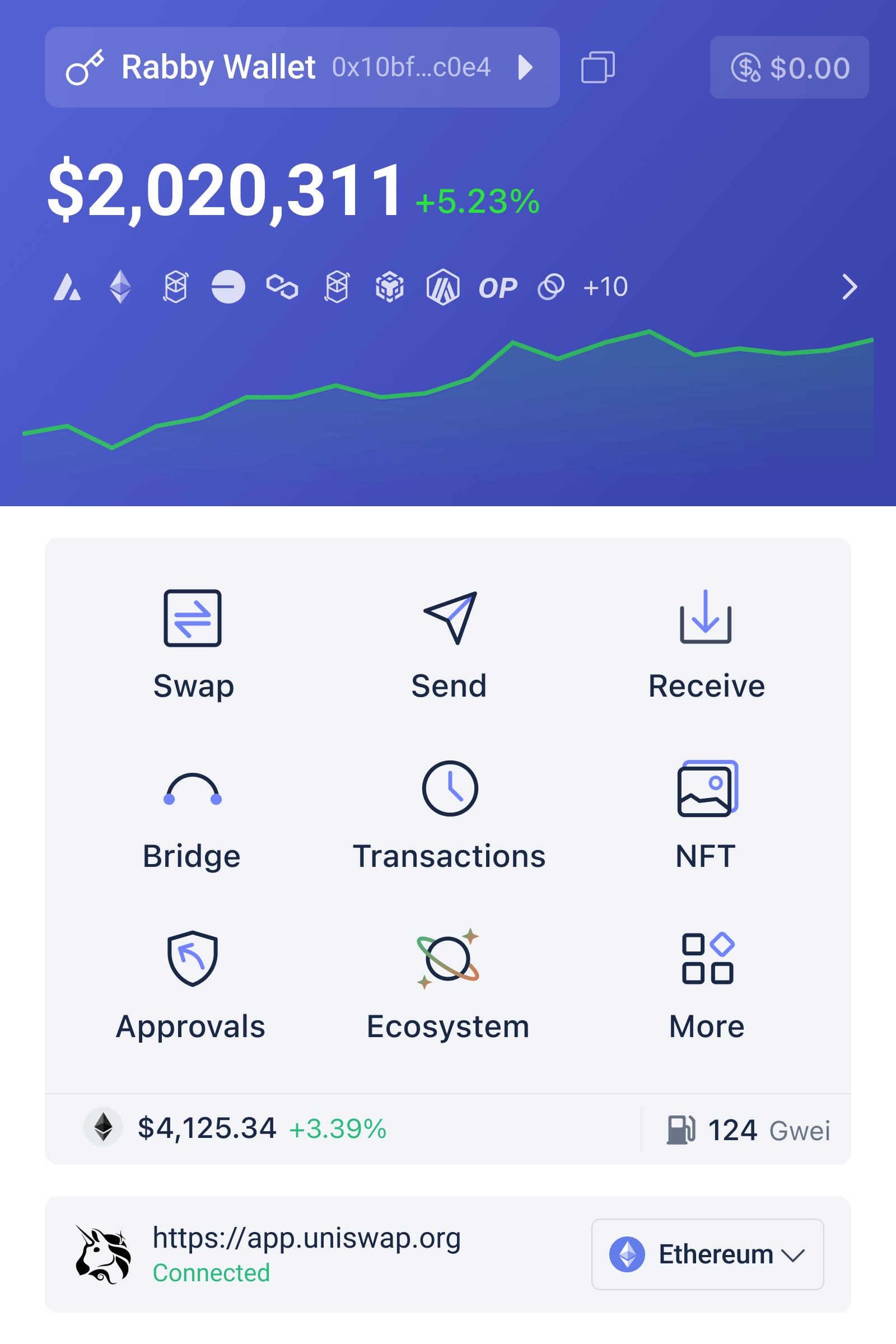
This is where transaction simulation has unusual educational value. A good preview can connect an abstract chain selection to concrete consequences: which token leaves the wallet, which token arrives, whether a network fee is paid, and whether an approval is being created. Users who are considering the rabby extension download should treat installation as the beginning of a review habit, not the end of one. The extension can improve visibility, but secure use still depends on installing from a trustworthy source, protecting the recovery phrase, and checking the application and network before signing.
There is also a US-specific practical consideration. DeFi users may interact with networks and applications subject to changing access restrictions, interface policies, tax reporting obligations, or regional availability. A wallet cannot determine whether a particular activity is legally or financially appropriate for an individual. It can display technical effects, while the user remains responsible for understanding the regulatory, tax, and custody context of the transaction.
A reusable review framework for DeFi users
Before signing, begin with intent: what action did you mean to perform, and what assets should change hands? Then compare that intention with the simulation. If the result shows an unexpected token transfer, a new approval, an unfamiliar contract, or a network different from the one you selected, stop. Next, assess persistence. A swap may be temporary, while an unlimited approval can create exposure after the current transaction is over. Finally, consider provenance: did you reach the application through a known domain, and does the contract address match the project’s established information?
This framework is deliberately more demanding than reading a green check mark. It separates four questions that are often collapsed into one: will the call execute, what will it do now, what permission will it create for later, and who controls the system receiving that permission? Transaction simulation addresses the second question especially well and can contribute to the first. It is less conclusive for the third and fourth.
The strongest workflow combines the alternatives according to the stakes. For a small, familiar swap, simulation plus a quick review may be proportionate. For a first interaction with a new protocol, manual contract and domain verification deserve more attention. For substantial funds, a hardware wallet and a separate test transaction may be justified, even though neither replaces simulation. The trade-off is obvious: more layers cost time and sometimes add operational complexity, but high-value transactions make that cost easier to justify.
What to watch next
Wallet security is likely to move toward richer explanations rather than merely more warnings. The important signal will be whether interfaces can explain permissions, contract relationships, and cross-chain consequences without overwhelming users with raw technical data. Conditional on better state access and clearer standards, simulations could become more useful for complex operations such as lending, staking, and bridging. But the limiting factor may remain interpretation: a highly detailed preview is not helpful if users cannot identify which effects are expected or which risks persist after signing.
For now, the decision is straightforward but not simplistic. Use simulation to test the expected outcome, use manual checks to establish context, and use key-isolation tools when the value or threat model warrants them. The secure multi-chain wallet is not the one that makes every transaction look safe. It is the one that makes uncertainty visible early enough for the user to make a different choice.
Frequently asked questions
Does transaction simulation guarantee that a DeFi transaction is safe?
No. It estimates or rehearses execution against available blockchain state and can reveal unexpected effects, but it cannot guarantee that a contract is trustworthy, that a website is authentic, or that market conditions will remain unchanged. Treat the result as evidence for review, not as a safety certification.
Is a hardware wallet a replacement for simulation?
No. A hardware wallet helps keep private keys isolated and can reduce the impact of some malware, but it may still sign a transaction that the user approves. Simulation explains likely contract effects; hardware protection helps defend the signing key. They address different parts of the security problem.
What should I check when using a multi-chain wallet?
Confirm the active network, the contract address, the token being sent, the expected token being received, the fee asset, and whether the transaction creates an approval or other lasting permission. If any item conflicts with your intended action, do not sign until the discrepancy is understood.