Why a Token Tracker Is Not Enough: Reading Solana Activity Through Wallet Context and Analytics

A wallet can appear to make only a handful of transactions while quietly coordinating a much larger operation. The reverse is also true: a busy Solana address may simply be processing routine program instructions, token-account maintenance, or automated settlement rather than making a meaningful investment decision. This is the counterintuitive starting point for using a token tracker, wallet tracker, and Solana analytics together. Transaction count is not the same as economic importance.

Consider a practical US-based scenario. A developer notices that a newly issued token has rising transfer activity and several wallets accumulating it. A trader sees the same pattern and wonders whether large holders are building positions. Before drawing that conclusion, the analyst needs to distinguish token transfers from swaps, identify the programs involved, examine wallet relationships, and establish whether the apparent activity comes from independent users or from a small cluster of related accounts. A blockchain explorer provides the raw trail; interpretation depends on reconstructing what happened.

Solana blockchain explorer interface used to examine transactions, wallets, tokens, and program activity

What a token tracker actually measures

A token tracker generally begins with an asset identifier and presents information such as transfers, holders, balances, market activity, and related transactions. This is useful because it turns a large ledger into a searchable view. On Solana, however, the visible token movement is only one layer of the event. The network uses programs and separate token accounts, so a single user action can produce multiple instructions and balance changes.

That distinction matters. A swap may involve a user wallet, one or more token accounts, a decentralized exchange program, liquidity pool accounts, and fee-related transfers. A token tracker may show several movements that look like separate trades even though they belong to one bundled transaction. Conversely, a transfer from one address to another may not reveal why the transfer occurred. It could represent a payment, treasury movement, a distribution, a custody change, or an internal operational step.

The most useful mental model is therefore not “the tracker tells me what the token is doing.” It is “the tracker exposes observations from which I can infer what participants may be doing.” That inference should remain conditional. A holder balance can be observed directly; the holder’s intention cannot. A transfer can be confirmed on-chain; the reason for it may require program context, surrounding transactions, and off-chain information.

For a first-pass investigation, a reader can ask three separate questions. What changed? Which accounts and programs were involved? What interpretation is supported by the sequence? Keeping those questions separate prevents a common mistake: converting a ledger event into a confident narrative before checking its mechanism.

From wallet tracker to wallet behavior

A wallet tracker is most valuable when it shows history rather than merely a current balance. A balance is a snapshot. Wallet behavior is a time series. Examining the order, frequency, counterparties, and program interactions of transactions can reveal whether an address behaves like a personal wallet, a trading account, a treasury, a liquidity provider, or an automated service. These labels are analytical categories, not guaranteed identities.

Suppose the suspected “whale” receives a token from a mint-related account, distributes portions to many new addresses, and repeatedly interacts with the same program. That pattern is materially different from an established wallet purchasing through a market venue and holding the asset over time. In the first case, the visible increase in holder count might reflect distribution or operational wallet design. In the second, it may be more consistent with market accumulation. Neither conclusion is automatic, but the wallet history narrows the plausible explanations.

Wallet analysis also benefits from looking at relationships rather than isolated addresses. Repeated transfers between a group of wallets, common funding sources, synchronized actions, or shared program usage can suggest coordination. Yet clustering is probabilistic. Common infrastructure can cause unrelated users to look connected, while sophisticated actors can separate their activity across many addresses. A wallet tracker can identify patterns of association; it cannot, by itself, prove common ownership.

This is particularly important for US users evaluating a token, protocol, or on-chain service. A dashboard may present “top holders” as a simple ranking, but concentration has several possible meanings. One address may be an exchange or custody account holding assets for many customers. Another may be a liquidity pool, vesting contract, treasury, or burn address. Treating every large balance as a discretionary investor can produce a seriously distorted view of supply risk.

How Solana analytics adds the missing layer

Solana analytics combines transaction records with aggregation and categorization. Its purpose is not just to display more data, but to make patterns comparable: activity by program, wallet flows over time, token-holder concentration, transaction frequency, and changes in balances. When used carefully, analytics helps answer questions that a single transaction page cannot.

A solscan blockchain explorer can serve as a practical starting point for moving between those layers. A user may begin with a token, inspect its transfers, open a particular wallet, follow a transaction into the relevant program instructions, and then compare the observed behavior with other accounts. The value lies in the chain of investigation, not in one headline metric.

There are three useful analytical levels. The first is the event level: a transaction, instruction, signature, or balance change. The second is the entity level: a wallet, token account, program, pool, or treasury. The third is the ecosystem level: flows among venues, protocols, and groups of accounts. Confusion often arises when a measurement from one level is used to make a claim about another. For example, a high number of instructions is an event-level fact, but it does not necessarily demonstrate high user adoption at the ecosystem level.

Analytics can also expose the difference between gross and net activity. Gross volume counts movements in both directions and may look impressive during churn or repetitive routing. Net flows show the resulting change in holdings, but can hide substantial intermediate activity. A serious review uses both. High gross transfers with little net change may indicate active market-making, arbitrage, rebalancing, or wash-like patterns; they may also reflect legitimate infrastructure. The data can identify a condition worth investigating, not settle the motive.

Comparing practical approaches

Explorer-first research

Using a general explorer is the most transparent approach. It lets the investigator inspect signatures, instructions, accounts, and token movements close to the underlying record. This is appropriate when debugging a failed transaction, verifying a payment, checking whether a token was received, or investigating an unfamiliar program interaction. The trade-off is time. Raw records are precise but cognitively expensive, and a user can miss a pattern by examining transactions one at a time.

Dashboard-based token tracking

A token dashboard is faster for monitoring holders, transfers, and broad activity. It is useful for screening several assets or watching changes over a defined period. The sacrifice is interpretive depth. Aggregation requires classification rules, and labels may be incomplete, delayed, or wrong in edge cases. A dashboard should guide questions, not replace verification of important transactions.

Programmatic Solana analytics

Developers and research teams may query indexed data or build their own pipelines. This offers repeatability, custom filters, alerts, and integration with internal tools. It is the strongest option for systematic monitoring, but it introduces engineering and data-quality costs. A pipeline must account for schema changes, missing labels, duplicated interpretations, token-account structure, and the difference between confirmed records and a researcher’s classification of those records.

These approaches are complementary rather than mutually exclusive. A sensible workflow uses a dashboard to identify an anomaly, an explorer to inspect the underlying transactions, and code or structured queries when the question must be repeated at scale. The decision should follow the task. Speed is valuable for screening; transaction-level detail is valuable for verification; automation is valuable when the same analysis must run continuously.

A reusable framework for investigating a token

Start with identity. Confirm the token address rather than relying on a symbol or familiar name. Similar symbols, misleading branding, and unofficial assets can create errors before analysis even begins. Next, establish the time window. A token’s holder distribution or transfer profile can change quickly, and an undated screenshot is weak evidence.

Then separate supply, ownership, and activity. Supply concerns how many units exist or are circulating under a particular definition. Ownership concerns which accounts control balances. Activity concerns how those balances move. These are related but not interchangeable. A token can have many transfers and remain concentrated among a small number of controlling entities; it can also have many holders but limited genuine usage.

After that, inspect the largest accounts by function. Ask whether an address appears to be a pool, treasury, exchange, vesting mechanism, program-controlled account, or ordinary wallet. Examine funding and counterparties, but treat conclusions as hypotheses unless the account’s role is explicit. Finally, compare the apparent signal against an alternative explanation. If accumulation is the claim, test whether the same pattern could instead be airdrop distribution, liquidity management, internal reshuffling, or automated execution.

This framework produces a more defensible conclusion than a single metric. It also creates an audit trail: what was observed, what was inferred, what remains uncertain, and which evidence would change the interpretation. That discipline matters for developers monitoring protocol health, users assessing risk, and researchers studying adoption.

Limits, risks, and what to watch next

On-chain analytics is powerful because the ledger is inspectable, but inspectability is not the same as complete visibility. Wallet ownership may be unknown. Off-chain agreements, centralized exchange activity, private communications, and legal control structures may not appear on Solana. Automated contracts can generate large amounts of activity without representing many human decisions. Analytics systems may also apply labels that simplify complex roles.

The recent project news dated August 11, 2026, describes Solscan as a leading block explorer, search, API, and analytics platform for Solana. That positioning is relevant to the direction of the tool category: users increasingly need a bridge between raw transaction data and structured investigation. If that bridge becomes more capable, the likely benefit is faster discovery of patterns. The condition is that users still verify how metrics are defined and how accounts are classified. Better presentation cannot remove ambiguity in the underlying behavior.

For the near term, watch the quality of attribution rather than only the quantity of features. Useful improvements would include clearer separation of wallet types, more transparent treatment of token-account mechanics, stronger historical views, and tools that distinguish confirmed facts from inferred labels. These developments would make analytics more decision-useful without pretending that intent can be read directly from a public ledger.

Frequently asked questions

What is the difference between a token tracker and a wallet tracker?

A token tracker organizes activity around an asset, showing transfers, holders, balances, and related market or program interactions. A wallet tracker organizes activity around an address, showing its transaction history, counterparties, balances, and recurring behavior. The first is useful for understanding an asset’s distribution and movement; the second is better for examining the role and patterns of particular accounts. Serious analysis often moves between both views.

Can Solana analytics prove that wallets belong to the same person?

No. Analytics can identify evidence of possible coordination, such as common funding, repeated transfers, synchronized actions, or shared infrastructure. Those signals may support a clustering hypothesis, but they do not prove legal ownership or intent. Exchange custody, program-controlled accounts, and automated services can create similar patterns, so important conclusions should remain qualified.

What is the safest way to interpret a large token transfer?

Inspect the full transaction, identify the source and destination account types, review nearby transactions, and determine whether the movement involved a pool, treasury, distribution mechanism, or ordinary wallet. Treat the transfer as evidence of movement, not automatically as a sale, purchase, or endorsement. Context is the difference between a useful observation and an unreliable story.


Gnosis Safe for Real Estate DAOs: Multisig Asset Management Beyond Crypto Treasuries

A group of real estate investors in three different jurisdictions wants to collectively own a commercial property valued at $2 million. They have tokenized the property’s ownership stake as an ERC-20 token, representing fractional shares. The problem is straightforward: how do they hold and manage those tokens, along with stablecoins earmarked for maintenance, without exposing any single member’s private keys or creating a bottleneck where one person must approve every transaction? A traditional single-signature wallet concentrates custody risk. A centralized custodian reintroduces intermediaries they were trying to avoid.

Real estate DAOs and other collective ownership structures face this problem repeatedly. Whether managing shared treasuries, coordinating capital calls, or distributing rental income, the underlying requirement is the same: multiple parties must collectively control assets without any one of them holding unilateral authority. A multisig wallet—specifically, a smart contract wallet like Safe Wallet—can distribute signing authority across members while keeping assets on-chain and governed by transparent, immutable rules. But moving from a traditional corporate structure to an on-chain multisig setup changes how ownership is represented, how approvals work, and what risks must be actively managed.

A diagram showing how Safe Wallet coordinates multiple signers across geographic regions to approve real estate asset transactions.

Why multisig matters for collective real estate ownership

Traditional corporate entities solve the collective ownership problem through legal structures: a trust, LLC, or corporation holds title, and bylaws determine who can act on behalf of the entity. That mechanism is familiar, but it introduces several friction points. Transferring legal title between jurisdictions requires lawyers and filing fees. Amending ownership structures takes time and creates windows of uncertainty. Distributing capital calls or income to dozens of members requires either a custodian or a manual process that scales poorly.

A multisig wallet like Safe Wallet replaces some of that legal apparatus with cryptography and smart contract code. Instead of asking “does the law permit this person to sign?”, the wallet asks “does the threshold of signers required by the smart contract approve this transaction?” Assets remain on-chain in a contract governed by rules that cannot be unilaterally changed. If the wallet is set to require 3 out of 5 signatures, then any valid transaction must carry cryptographic proof that at least three authorized members approved it. A single member—even the founder or largest investor—cannot drain the treasury or send funds without consensus.

For real estate tokenization, this structure has concrete advantages. If a property is represented as 1,000 ERC-20 tokens and distributed among 20 owners, the tokens can be held in the multisig wallet. Stablecoins designated for maintenance, property taxes, or capital improvements can accumulate in the same contract. When funds are needed—for example, to pay for roof repairs—the required signers can collectively approve a transaction to transfer stablecoins to the contractor. The transaction is visible on-chain, timestamped, and cannot be reversed by a single bad actor. Every member can audit the treasury directly from the blockchain.

How Safe Wallet distributes signing authority

A Safe Wallet is not a wallet in the traditional sense of a holder of private keys. It is a smart contract deployed on an EVM-compatible blockchain that holds assets and executes transactions only when certain cryptographic conditions are met. The wallet itself has no single private key. Instead, it maintains a list of authorized signers—external accounts or other smart contracts—and a threshold number that must approve any transaction.

Signers are typically represented by Ethereum addresses, which can be controlled by hardware wallets, software wallets, or institutional key management systems. If a DAO has five core members, each might control a signer address using a hardware wallet stored in their office. The Safe Wallet is configured with a threshold of 3-of-5, meaning any three members must cryptographically sign a proposed transaction before it can execute. No member’s private key is stored on the Safe Wallet contract. The wallet simply verifies that the signatures are valid and come from authorized addresses.

This architecture eliminates shared ownership account risks that plague shared bank accounts or cloud-based vaults. No single login credential unlocks the treasury. No shared password creates a point of compromise that could leak to disgruntled employees or be coerced from an individual. Each signer controls their own cryptographic material and can sign or refuse to sign independently. A member cannot be forced to sign by a hacker who gains access to the wallet interface, because the interface does not hold signing authority. The signer’s device must approve the transaction.

Role-based access control can refine this further. Some signers might be designated as “approvers” who review transactions, while others are “executors” who broadcast approved transactions to the blockchain. Administrative signers can add or remove members, while financial signers approve spending. The Safe Wallet interface can be configured to assign different permissions to different members, though the underlying rule is always the same: the smart contract enforces the threshold, not human judgment or workflow software.

Stablecoins and RWA tokens in multisig custody

Real estate DAOs typically accumulate capital in stablecoins—USDC, USDT, DAI—rather than volatile cryptocurrencies. The multisig wallet can hold these tokens just as easily as it holds Ether. When a property purchase requires capital, members send stablecoins to the Safe Wallet’s address. Because the wallet is a smart contract with a known code, the transfer cannot be blocked or redirected by a compromised intermediary. The stablecoins sit in the contract, secured by the multisig approval requirement, until the majority votes to spend them.

RWA (real-world asset) tokens add a layer of abstraction. If a property is tokenized—meaning a blockchain-based token represents legal ownership or a claim on the property—that token is an ERC-20 or ERC-721 asset. The Safe Wallet can hold and transfer these tokens just as it handles stablecoins. A DAO that owns a commercial building might issue 10,000 tokens to represent 100% ownership, then distribute them proportionally to members. The tokens are held collectively in the Safe Wallet smart contract, and transfers (such as selling the building or buying additional properties) require multisig approval.

The critical difference from a bank or brokerage account is that the assets are on-chain and transparent. If a member wants to verify that the DAO actually holds the tokens it claims, they can query the blockchain directly. They do not need to request a statement from a custodian or trust an audit. The transaction history is immutable and auditable forever. This transparency has legal implications for DAOs in some jurisdictions—it can support the claim that ownership is truly distributed and decisions are governed by code, not a single administrator.

Integration with governance tokens and voting

Many real estate DAOs issue governance tokens separate from ownership tokens. Governance tokens determine voting power over decisions like property maintenance, capital calls, or member admission. The Safe Wallet can hold governance tokens, but more importantly, the wallet’s signature requirement can be tied to on-chain voting.

An advanced configuration links Safe Wallet transaction execution to a DAO governance contract. A member proposes a transaction—for example, approving a $50,000 maintenance budget. The proposal is published to a governance contract and voting begins. Members holding governance tokens vote for or against it. If the vote passes, a script or relayer broadcasts the transaction to the Safe Wallet, which executes it because the required signatures have been cryptographically validated by the governance contract.

This layering serves real estate DAOs well. It separates treasury management from governance. The Safe Wallet is responsible for holding assets and enforcing the multisig requirement. The governance contract handles voting, discussion, and weighted decision-making. A member might have governance rights proportional to their ownership stake, but the actual signers on the Safe Wallet might be a smaller group of trusted operators elected by the DAO. This prevents governance attacks where a single large voter could hold up all transactions.

For a real estate DAO with 100+ members, requiring every member to sign every transaction is impractical. Instead, members vote on budgets and policies through governance, while a smaller council of signers—perhaps 7 members chosen by the DAO—holds the actual signing authority. The signers execute transactions that align with governance decisions. If a signer misbehaves, the DAO can vote to remove them and add a replacement. The smart contract rules remain in force: no transaction executes without the required threshold of valid signatures.

Practical deployment: Signer management and operational security

Setting up a Safe Wallet for a real estate DAO requires careful planning of signer configuration. A common pattern is a 3-of-5 threshold: five members hold signing keys, and any three must approve a transaction. This provides resilience—if one signer is unavailable or loses their key, the wallet remains operational. It also requires consensus: no single member can unilaterally move assets.

Each signer should ideally control their key using a hardware wallet—a Ledger, Trezor, or similar device. Hardware wallets hold the private key offline and never transmit it to the internet. When a transaction is proposed in the Safe Wallet interface, the signer is prompted to approve it on their hardware device, then signs it locally. The signature is then broadcast to the Safe Wallet smart contract. This design means a compromised computer or even a compromised Safe Wallet frontend cannot trick a signer into approving a malicious transaction, because the signer’s device shows the exact details (recipient, amount, asset type) before signing.

Geographic distribution of signers is important for real estate DAOs with members spread across regions. If all five signers are in the same office building and that building loses internet connectivity, the DAO cannot execute transactions. If signers are located in different countries, a single local outage or regulatory action is less likely to disable the entire wallet. Similarly, if all signers are known to work together, a sophisticated attacker might focus on compromising all of them. Distributing signers across organizations and time zones reduces the likelihood that a single attack vector affects the entire threshold.

A recovery mechanism is essential but often overlooked. If a signer loses their hardware wallet or forgets the PIN, they cannot sign transactions. The DAO should establish a process to replace lost signers: perhaps a governance vote to remove the lost signer and add a new member. This requires that the current signers can still meet the threshold without the lost member. A 3-of-5 wallet can lose one signer and continue operating. A 2-of-3 wallet cannot. Configuration should account for realistic scenarios where members become unavailable.

Monitoring transactions and detecting unauthorized activity

Once a Safe Wallet is deployed and signers are in place, ongoing monitoring becomes crucial. Unlike a traditional bank account where the institution monitors activity, a smart contract wallet relies on members to watch for suspicious transactions. The good news is that the blockchain provides an auditable record. Every transaction proposed, signed, and executed is visible on the blockchain explorer.

Real estate DAOs should establish a monitoring process. A member can subscribe to a service that alerts them whenever the Safe Wallet address sends a transaction. Blockchain explorers like Etherscan have APIs that can be integrated into internal dashboards. Snapshot voting platforms and other DAO tools often provide activity summaries. The key is that at least one member actively reviews transactions regularly and can raise an alarm if an unauthorized transaction appears.

An unauthorized transaction would require the minimum threshold of valid signatures from authorized signers. This might seem impossible—how can a transaction be signed by legitimate signers without their knowledge? But several scenarios are real: a signer’s device could be compromised and signing transactions without the owner’s awareness; a signer might be coerced to sign a malicious transaction; or a governance process might be manipulated to propose a transaction the DAO does not actually want. If a member notices an unauthorized transaction, the recourse is a governance vote to remove the misbehaving signer and add a replacement, but funds already moved cannot be recovered from the blockchain.

To mitigate this risk, some DAOs implement additional controls. A time lock adds a delay between when a transaction is approved and when it executes, giving members time to notice and react if something is wrong. A spending limit restricts the maximum amount that can be sent in a single transaction without an additional governance vote. These are smart contract features that can be layered on top of the Safe Wallet itself, adding friction but improving security for high-value treasuries.

Layer 2 solutions and cross-chain considerations

A real estate DAO might be spread across multiple blockchains. Ethereum mainnet is expensive for frequent transactions. Polygon, Arbitrum, or other Layer 2 solutions offer lower fees and faster settlement. Safe Wallet is deployed on many EVM-compatible chains, allowing DAOs to choose the network that fits their transaction volume and budget.

However, having assets on multiple chains introduces operational complexity. If some capital is on Ethereum and some on Polygon, the DAO must coordinate signings across chains or maintain separate multisig wallets on each. Cross-chain bridges can move assets between networks, but bridges introduce their own risks—a bridge contract could be exploited, or a wrapped token on one chain might not be fully backed on another.

A common approach is to designate one network as the primary treasury and use bridges selectively. For example, the DAO might keep the majority of stablecoins on Ethereum mainnet and move smaller amounts to Polygon for operational expenses. This concentrates risk on one chain but simplifies governance and reduces the number of multisig wallets that must be monitored. The trade-off depends on the DAO’s transaction patterns and risk tolerance.

Integration with Web3 dApps and smart contract interactions

A Safe Wallet is not limited to simple token transfers. It can approve and execute complex smart contract interactions. For instance, a real estate DAO might want to deploy capital across DeFi protocols to generate yield on idle stablecoins. The multisig wallet can approve and execute interactions with lending protocols, staking contracts, or liquidity pools, just as a regular wallet would.

This capability extends treasury management beyond passive holding. If a DAO holds $500,000 in USDC that will not be needed for six months, it could be deposited into a lending protocol to earn interest. The Safe Wallet can execute this transaction after multisig approval. When the DAO needs the funds, another multisig-approved transaction withdraws them. All interactions are visible on-chain and governed by the same multisig rules as simple transfers.

The complexity of smart contract interactions increases security considerations. A proposal to deposit stablecoins into a new, unaudited lending protocol carries more risk than a simple transfer. The DAO should have a process for evaluating smart contracts before approving interactions: reviewing code, checking audit reports, and assessing the track record of developers. The Safe Wallet interface itself can be customized to warn members about high-risk transactions or require additional approvals for certain contract types.

You can learn more about Safe Wallet’s architecture and implementation details on the official Safe Wallet site, which provides documentation and deployment guides for different use cases, including DAO treasury management. For a real estate DAO, understanding the underlying smart contract mechanics—how signatures are validated, how thresholds are enforced, and how transactions are queued and executed—is essential before deploying production capital.

Comparing multisig wallets to other treasury structures

A real estate DAO could theoretically manage its treasury through other mechanisms: a traditional corporate legal entity, a custodian like Coinbase or Fidelity, or a decentralized custodian that holds assets on behalf of the DAO. Each approach has different trade-offs.

A traditional legal entity—a Delaware LLC or trust—provides legal clarity and integrates with the existing financial system. Banks accept wire transfers from LLCs and can hold U.S. bank accounts. Lawyers and accountants understand how to structure them. The downside is that asset transfers require legal processing, custody is often centralized, and operational decisions may require in-person signatures or slow approval processes.

A custodian like Coinbase simplifies onboarding and integrates with traditional finance, but it reintroduces the single point of failure problem. If Coinbase is hacked, freezes accounts due to regulatory pressure, or simply goes out of business, the DAO loses access to its assets. The custodian knows exactly what the DAO owns and can be forced to disclose that information.

A Safe Wallet optimizes for decentralized control, on-chain transparency, and no single custodian. The trade-offs are operational: signers must manage their own hardware wallets and private keys, the interface is more technical than a traditional bank portal, and there is no customer service number to call if something goes wrong. Recovery from mistakes or attacks relies on governance and community action, not a company’s policies.

For a real estate DAO, the ideal solution often combines elements. The DAO might use a Safe Wallet to hold cryptocurrency (stablecoins, RWA tokens, governance tokens) while using a traditional legal entity or custodian for bank accounts and fiat settlement. The multisig wallet becomes the DAO’s treasury, while the legal entity handles its corporate filings and bank relationships. Assets can flow between the two: fiat deposits to a bank account, converted to stablecoins through an exchange, and transferred to the Safe Wallet for on-chain operations.

Frequently asked questions

Can a Safe Wallet hold real estate tokens and stablecoins together?

Yes. A Safe Wallet is a smart contract that can hold any ERC-20 token, ERC-721 NFT, or native blockchain asset. A real estate DAO can store RWA tokens representing property ownership, stablecoins for operational expenses, and governance tokens in the same wallet. All assets are subject to the same multisig approval rules.

What happens if a signer loses their hardware wallet?

If a signer loses their device, they cannot sign transactions. The DAO must vote to remove the lost signer from the multisig configuration and add a replacement. If the current signers still meet the required threshold without the lost member, the DAO can continue operating. This is why a 3-of-5 configuration is more resilient than 2-of-3: losing one member does not disable the wallet.

Is a Safe Wallet suitable for a small real estate investment group?

Yes, though the overhead may be higher than for a simple partnership. For a small group (3–5 members) where members are technically inclined and committed to managing private keys, a Safe Wallet provides strong security and transparency. For larger or less technical groups, a traditional legal entity or custodian may be more practical. The choice depends on the group’s priorities around custody risk, transparency, and operational complexity.

OKX Exchange, Installation and DeFi: Where the Wallet Fits in a Multi-Chain Strategy

A common misconception is that installing the OKX Wallet Extension is simply another way to log in to the OKX exchange. It is not. The exchange is primarily a trading and custody platform, while the browser extension is a self-custodial Web3 wallet: a tool that lets users interact directly with decentralised applications, smart contracts, NFTs and on-chain markets. The two can complement each other, but they involve different trust models, different risks and different responsibilities.

That distinction matters especially for users in Germany and elsewhere in Europe. Someone looking to buy Bitcoin or trade liquid assets may value an exchange interface, familiar order types and account-based recovery. Someone exploring OKX DeFi needs a wallet that can sign blockchain transactions without handing private-key control to a central intermediary. The right choice therefore depends less on which product has more features and more on what the user is trying to do, how often they move across networks, and how much operational responsibility they are prepared to accept.

OKX Wallet interface illustrating multi-chain access for DeFi, swaps and digital asset management

Exchange and wallet: two different mechanisms

An exchange normally maintains an account ledger on behalf of its customers. When a user trades within that platform, the transaction may be recorded internally rather than immediately settled on a public blockchain. This can make trading convenient and efficient, but the user depends on the exchange’s systems, policies and withdrawal processes. A wallet works differently. It stores or controls the credentials needed to authorise on-chain transactions, and the blockchain records the resulting activity.

The OKX Wallet Extension follows a non-custodial model. According to the product information, private keys are encrypted and stored locally on the user’s device rather than transmitted to OKX servers. Recovery relies on a 12- or 24-word seed phrase. This is a meaningful form of control, but it is not a promise that funds are automatically safe. If the seed phrase is exposed, copied by malware or destroyed without a backup, the consequences can be difficult or impossible to reverse. Self-custody removes one category of intermediary risk while increasing personal security duties.

For a reader searching for “okx installieren”, the practical lesson is to treat installation as the beginning of a security process, not the completion of one. Use the official browser-extension distribution route, verify the publisher and avoid installing software from advertisements, unsolicited messages or search results that imitate a brand. After setup, the seed phrase should be written down offline and never entered into a website, chat window or support form. A browser wallet is convenient precisely because it is close to the web; that proximity is also its attack surface.

Why OKX is attractive for DeFi users

The extension’s central proposition is breadth. It supports major networks such as Bitcoin, Ethereum, Solana, BNB Chain, Polygon and Avalanche, as well as Layer-2 networks including Arbitrum, Optimism, zkSync and Base. The stated coverage ranges from more than 80 to more than 130 blockchains, depending on how networks and assets are counted. Automatic network recognition can reduce one familiar source of user error: selecting the wrong network manually before attempting a transaction.

Multi-chain support, however, is not the same as frictionless interoperability. Assets on separate chains are not automatically interchangeable. A swap may require a bridge, a cross-chain routing mechanism or a provider that takes on additional technical and counterparty risk. Network fees, confirmation times, liquidity and smart-contract design still vary. The useful mental model is not “one wallet equals one unified blockchain account”, but “one control layer gives access to many different settlement environments”. The interface may look unified while the underlying risks remain fragmented.

For token swaps, the integrated DEX aggregator compares prices across more than 500 decentralised exchanges. Aggregation can improve execution by searching for liquidity and comparing routes rather than relying on a single venue. Yet the displayed exchange rate is not the same as the final economic result. Slippage, price impact, network fees, routing fees and the quality of available liquidity all matter. A technically optimal quote can become unattractive if the market moves before confirmation or if the transaction needs a costly route through several pools.

The DApp hub adds another layer of convenience by bringing decentralised applications into one discovery environment and displaying indicators such as active users and trading volume. These metrics may help users investigate unfamiliar protocols, but they should not be treated as a safety certificate. Usage can reflect speculation, incentives or short-term campaigns; volume can be concentrated or economically unproductive. A sensible DeFi review still asks what the contract does, which permissions it requests, how liquidity is formed and what happens in an adverse market.

Security features help, but they do not replace judgement

The wallet includes proactive threat-protection functions designed to warn about phishing websites, block potentially malicious smart contracts and simulate transactions before signing. Simulation is particularly valuable because many wallet users understand the asset they intend to send but not the exact contract call they are authorising. A preview can reveal an unexpected approval, transfer or interaction and create a pause before an irreversible action.

There is an important boundary condition. Security warnings are detection tools, not mathematical guarantees. A new or malicious contract may not yet be recognised; a legitimate-looking application may still contain economic weaknesses; and a user can approve a dangerous action after dismissing a warning. Smart-contract risk also differs from key-compromise risk. Keeping a seed phrase private protects the signing authority, but it does not make every protocol that authority interacts with trustworthy.

Hardware-wallet integration can improve the security architecture for larger holdings or frequent signing. The extension can connect with devices such as Ledger and Keystone, and Keystone can support an air-gapped QR-code connection. In broad terms, the browser remains useful for viewing and initiating activity while the hardware device isolates key operations. This adds friction and requires careful verification of addresses and transaction details, but that friction is often a feature rather than a defect when the cost of an unnoticed approval is high.

OKX compared with MetaMask, Phantom and Ledger Live

MetaMask remains a natural fit for users whose activity is concentrated on Ethereum and other EVM-compatible chains. Its narrower focus can be an advantage: fewer environments may mean a simpler mental model, especially for someone who mainly uses Ethereum-based DeFi. OKX is more compelling when a user wants one extension for EVM and non-EVM ecosystems, Bitcoin-related assets, Solana and several Layer-2 networks. The trade-off is cognitive complexity. More networks and integrated routes create more possibilities, but also more opportunities to misunderstand chain-specific fees, token standards or bridge assumptions.

Phantom is strongly associated with Solana and is often attractive to users who prioritise that ecosystem’s applications, tokens and user experience. OKX offers broader native multi-chain coverage, which may reduce the need to maintain separate wallets. That does not make it universally better. A specialist wallet can sometimes provide clearer workflow and ecosystem-specific support, while a generalist wallet is valuable when portfolio activity is spread across several networks.

Ledger Live occupies a different position in the comparison. Its defining strength is hardware-based key protection and portfolio management around Ledger devices, rather than acting primarily as a lightweight browser gateway to every DeFi application. OKX can connect to Ledger and Keystone, so the choice is not necessarily either-or. A useful arrangement for some users is a browser extension for discovery and transaction preparation, combined with hardware confirmation for meaningful balances. The additional steps may reduce convenience, but they also make impulsive signing harder.

There is one technical detail that is easy to miss during migration. Wallets imported using only a single private key cannot create derived accounts in the same way as a wallet restored from a seed phrase. If a user needs derived subaccounts, importing the relevant seed phrase is required. This is not merely a menu limitation: it reflects the difference between one isolated key and a hierarchical wallet structure. Before moving funds, users should decide whether they need multiple accounts, separate risk compartments or watch-only monitoring.

Features that change how users should operate

The watch-only mode is a useful example of risk-aware design. By adding a wallet address or an ENS domain, users can monitor balances across more than 80 networks without importing private keys. This is suitable for observation, accounting and portfolio review, but it cannot authorise a transfer. In practice, separating “looking” from “signing” can reduce unnecessary exposure, particularly on a computer used for research or public-facing work.

NFT management is also available across EVM and non-EVM networks, including viewing, transferring and trading. The important analytical point is that an NFT is not simply an image displayed in a wallet. Ownership is represented by on-chain data, while the media may depend on separate storage and application infrastructure. A wallet interface makes the asset easier to manage, but it cannot eliminate questions about provenance, metadata persistence, marketplace permissions or the authenticity of a collection.

AI-assisted features such as OKX Agentic Wallet illustrate both the promise and the unresolved problem of abstraction. A natural-language instruction such as “swap 1 ETH into USDC” can make transaction preparation more accessible, while simulation can expose the proposed action before signing. But language is inherently less precise than a transaction payload. The safest model is therefore an assistant that prepares and explains an action, not an autonomous decision-maker that receives unlimited authority. Users should still confirm the network, asset, amount, recipient, allowance and expected fee.

Recent OKX positioning in Europe combines exchange access for assets such as BTC and ETH with broader TradFi, Web3 and DeFi functionality. That convergence may be useful for users who want to move from fiat or exchange-based trading into on-chain activity. It also makes product boundaries more important, not less. Exchange balances, wallet balances and positions in DeFi protocols can have different liquidity, withdrawal, tax-record and counterparty characteristics. German users should keep their own transaction records and consider how each activity fits their personal tax and regulatory circumstances; a wallet interface is not a substitute for professional advice.

A practical decision framework

Choose an exchange-first workflow if your main needs are buying, selling and conventional trading, and you prefer account recovery and platform-managed custody. Choose a wallet-first workflow if your goal is direct interaction with DeFi, NFTs or decentralised applications and you understand seed-phrase responsibility. Choose a hardware-assisted workflow if the value at risk is substantial enough that protecting keys matters more than maximising speed. The OKX extension can sit in all three arrangements, but it does not remove the trade-offs between convenience, control and complexity.

Before signing a DeFi transaction, ask four questions: Which chain is being used? What exactly is the contract asking permission to do? What is the maximum amount that could leave the wallet? And what would make the position difficult to unwind? This checklist is more reusable than any feature list. It focuses attention on the mechanism of loss rather than the appearance of the application.

Looking ahead, the most important signal is not simply how many chains or DApps a wallet adds. It is whether aggregation, simulation and AI assistance can reduce errors without encouraging users to delegate understanding. If interfaces become better at explaining permissions, route risks and failure conditions, multi-chain DeFi could become more approachable. If abstraction merely hides complexity, users may sign faster while understanding less. The outcome depends on design quality and user discipline, not on the number of buttons in the extension.

Frequently asked questions

Is the OKX Wallet Extension the same as the OKX exchange?

No. The exchange is an account-based trading platform, while the extension is a non-custodial wallet for interacting with blockchains and DApps. They can work together, but their custody models and risks are different.

What is the safest way to install and use it?

Use the official distribution channel, verify the publisher, protect the seed phrase offline and never enter it into a website or support conversation. For larger balances, consider connecting a compatible hardware wallet and review every transaction before signing.

Is OKX a better choice than MetaMask or Phantom?

It depends on the portfolio. OKX is well suited to users who want broad multi-chain coverage, while MetaMask may be simpler for EVM-focused activity and Phantom may be preferable for a Solana-centred workflow. Ledger Live is more naturally aligned with hardware-based custody.

Where can a new user learn more before installing?

A product overview of okx can help orient a new user, but independent verification remains essential. Confirm the installation source, read the requested permissions and begin with small test transactions rather than assuming that a familiar interface makes an unfamiliar protocol safe.

Aussie online casinos with Australian dollars: what to know in 2025

For Australian players, the phrase aussie online casinos with Australian dollars covers more than simple convenience. It means paying deposits, setting bet limits and requesting withdrawals in one familiar currency: AUD. Platforms designed for this market remove the hidden cost of exchange-rate margins and let you track your bankroll without mental arithmetic. Because Australia has no locally licensed online casino sector, offshore operators are the main practical route for real-money gaming, and those that provide direct AUD support are much easier to manage.

That does not mean every AUD-friendly site is safe. Players need to compare payout policies, bonus conditions and software providers before committing. A practical way to start is to visit a comparison portal; for example, you can check the website for current promotions and support details. Once you understand the market, the real task is separating trustworthy gambling venues from poorly run operators.

Why direct Australian dollar support makes a difference

Direct currency support also simplifies responsible gambling. If you deposit $200 AUD, you immediately know the amount you are risking. On a site that works in US dollars, your balance may be held in USD and converted only at cashout, often with a fee built into the exchange rate. That extra cost can turn a high-return game into something less favourable.

Australian banks have also become more cautious with payments to betting operators. This places more weight on flexible banking options such as PayID, POLi and debit cards. An AUD casino with clear local settlement usually processes withdrawals faster because it never waits for a second currency conversion.

How to identify a fair AUD casino before you sign up

Licensing is the first filter. A reliable destination holds a current licence from an authority such as the Malta Gaming Authority, the UK Gambling Commission or the Curacao eGaming body. The licence number should be visible in the footer, and you can verify it on the issuer’s registry. For a quick scan of available platforms, spinagocasino7.online/ groups casinos by licence type and AUD banking.

Payment transparency tells you as much as licence wording. If a casino displays an Australian dollar balance, uses AUD in its minimum deposit rules and states withdrawal limits in AUD, it has clearly built its service for local users. Vague terms or constant references to “equivalent currency” are warning signs.

Licence verification without the jargon

A valid regulator provides a player dispute channel. Some offshore providers rely only on an audit certificate from a testing laboratory such as eCOGRA or iTech Labs. Look for both elements: an audit confirms game fairness, while a licensing body gives you an external escalation path when a complaint stalls.

Banking choices at Australian dollar online casinos

The quality of an AUD casino often comes down to deposit methods. Bank transfer can carry lower fees, but PayID and POLi are faster. Cards are accepted instantly, although some Australian banks block gambling transactions altogether. The safest approach is to keep at least two funding options active.

Before using any method, confirm that withdrawals are able to return to the same source. Some casinos accept an AUD deposit and then send the payout through an international processor, adding days to the wait. The comparison below covers common routes seen at Aussie-friendly venues.

Payment method AUD availability Typical speed
Bank transfer / PayID Yes at many sites 1–3 business days
Debit card Yes, but bank-dependent Instant deposit
E-wallet Not always accepted Up to 24 hours
Crypto / stablecoin Growing in the offshore market Minutes to 1 hour

Experienced players often care more about fees and transaction caps than initial speed. Check whether a casino charges for AUD cashouts and whether the minimum withdrawal is lower for PayID than for standard bank transfer.

How AUD bonuses compare with USD promotions

Welcome bonuses can look larger before exchange-rate math is applied. A 100% match on a US dollar account is not necessarily the same value as a 100% match in Australian dollars. Reading bonus terms in AUD gives a clearer picture of the true offer.

When comparing deals, focus on wagering requirements, game contribution and time limits. An online casino can hand out many free spins, but if pokies contribute 100% to clearing requirements while table games contribute only 10%, the bonus works differently. The spinago-casino-au.top directory lists bonus conditions next to verified licences, which makes side-by-side auditing easier.

Another common trap is a low maximum win attached to free spins. Players can clear the wagering target and then discover that the remaining balance has been capped. A reliable AUD bonus always states the maximum cashout in the local currency.

Live dealer games and local payment experiences

Live dealer tables have changed the way Australian users play online. Instead of watching automated casino games, players can join real tables with trained dealers. A platform that accepts AUD deposits still requires you to check whether live table stakes are shown in AUD or USD; if your account is silently converted, the promised Aussie support is less complete.

For a view into how operators handle live play in a nearby market, https://remcohomes.com/best-live-casino-new-zealand-real-dealers-kiwi-friendly-play/ covers streamed tables and dealer standards for New Zealand users. Much of the same software appears in AU-friendly casinos, so that type of review is a helpful guide.

Game variety matters as much as browser quality. Look for titles from studios such as Evolution, Pragmatic Play and Play’n GO; their live rooms and pokies have clear rules and are tested regularly by independent auditors.

AUD casino checklist before you join

Anyone can offer a deposit button labelled in Australian dollars, but reliable venues separate themselves with small details. When deciding where to play, use a practical checklist rather than a glossy logo.

Key checks before you use Australian dollars

  • Confirm a full AUD withdrawal path, not just an AUD deposit option.
  • Find the licence number and read the casino’s cashout policy.
  • Look for a wagering multiplier below 40x on pokies.
  • Check whether PayID, bank transfer and e-wallets are available in your state or territory.
  • Test customer support during Australian hours with a simple AUD banking question.

Most of these checks take less than ten minutes. A safe casino does not hide cashout limits behind busy menus; it puts withdrawal rules in plain sight.

What may change for AUD casino players in 2025

Several shifts point toward tighter scrutiny of payment flows rather than new local licences. Australian banks increasingly ask customers to confirm gambling transactions before approval. This makes it important to select platforms with multiple AUD payment rails, because no offshore casino can guarantee that every bank will accept every transfer.

Independent review sites and casino communities will become more useful as software libraries grow. If local rules change, operators listed in those directories and those showing strong responsible-gambling tools are more likely to adapt quickly. Keeping a stable AUD balance remains the simplest sign that a casino is serious about the Australian market.

Transaction Simulation, Multi-Chain Wallets, and the Real Meaning of Wallet Security

What if the most dangerous wallet action is not signing a transaction, but signing one you never truly understood? In DeFi, a familiar button can conceal a token approval, a contract call, a chain switch, or an unexpected transfer. Transaction simulation changes the question from “What am I about to sign?” to “What is likely to happen if this transaction succeeds?” That is a substantial improvement, but it is not a magic shield. Its value depends on the quality of the simulation, the accuracy of the wallet’s interpretation, and the user’s willingness to pause when the result is ambiguous.

For US-based DeFi users moving among Ethereum, layer-2 networks, and other EVM-compatible chains, this distinction matters. A multi-chain wallet reduces the friction of switching networks, but convenience can also compress several decisions into one interface. Comparing transaction simulation with ordinary wallet warnings and with more manual security practices reveals a useful principle: security is not a single feature. It is a chain of evidence between the action a user intends and the state change a blockchain is likely to produce.

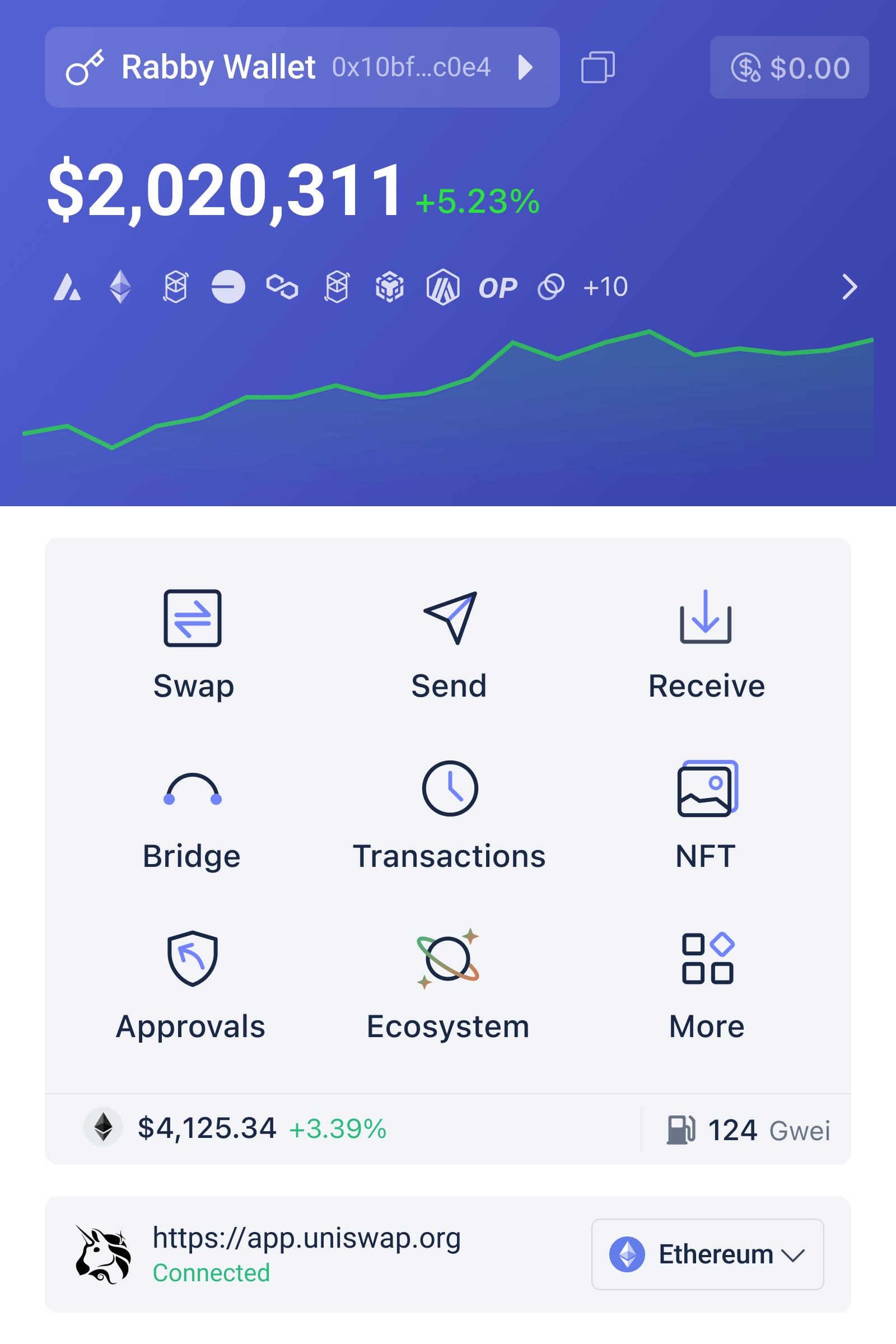
Wallet interface illustrating transaction review across decentralized finance networks

Three approaches to reviewing a DeFi transaction

The first approach is conventional wallet confirmation. A wallet displays a destination address, a method name, network fees, and perhaps raw calldata or a simplified summary. The user checks these fields and signs. This is better than signing without any review, especially when the recipient and contract are familiar. Yet it places a heavy interpretive burden on the user. Contract calls are often encoded, token amounts may be difficult to contextualize, and a legitimate-looking application can request permissions broader than the immediate trade requires.

The second approach is transaction simulation. Before signing, a wallet or connected service attempts to execute the proposed call in an equivalent environment without broadcasting it. The result can reveal expected balance changes, received tokens, spent tokens, approvals, failed calls, and other effects. Mechanistically, this is closer to a rehearsal than to a prediction: the proposed transaction is tested against a recent representation of blockchain state. For a swap, the useful question is not merely whether the call is valid, but whether the simulated outcome matches the user’s intent.

The third approach is manual or layered verification. A careful user checks the application domain, confirms the network, inspects the contract and token, limits approval amounts where possible, and may use a hardware wallet for key isolation. This approach can be highly robust, but it is slower and requires knowledge. A hardware wallet protects private keys from many browser and computer compromises; it does not automatically determine whether a user is approving a malicious contract. Manual checking catches context that a simulation may miss, but it is vulnerable to fatigue and unfamiliar technical details.

These methods are not substitutes in every situation. Simulation is strongest when it makes a complex outcome legible. Manual verification is strongest when identity, provenance, or unusual contract behavior matters. Hardware signing is strongest as a barrier against unauthorized key use. The practical comparison is therefore not “which feature wins?” but “which failure mode is each layer addressing?”

Why simulation improves understanding—and where it breaks

A common misconception is that a successful simulation means a transaction is safe. It does not. It usually means that, under the simulated state and execution conditions, the call did not fail and produced a particular set of effects. A malicious transaction can execute perfectly. If the simulation shows that a wallet will lose valuable tokens, the warning is useful; if the user misunderstands the displayed result, the underlying security problem remains.

Simulation also depends on state. Decentralized exchanges, lending protocols, bridges, and other applications can change between the moment of simulation and the moment of inclusion in a block. Prices move, liquidity changes, another transaction may alter a market, and the target contract may behave differently under new conditions. Slippage limits and deadlines address some of this uncertainty, but they do not eliminate it. In congested conditions, a transaction can be delayed long enough for its economic outcome to diverge from the preview.

There is a second boundary: not every risk is visible as a simple balance change. A contract may grant an allowance that becomes dangerous later rather than immediately. A signature may authorize an off-chain message or permit-style approval rather than transfer assets at once. Governance or administrative powers may be embedded in a protocol’s design. Simulation can help expose the immediate effect, but users still need to distinguish a one-time action from a durable permission.

For that reason, the most informative mental model is “simulation as evidence,” not “simulation as certification.” It supplies evidence about execution and expected state changes. It does not certify the application, the contract’s long-term behavior, the authenticity of a website, or the safety of a private key. That sharper distinction prevents a useful tool from becoming a false source of confidence.

How a multi-chain wallet changes the security problem

A multi-chain wallet brings several networks into one workflow. This is valuable because users can manage assets, connect to decentralized applications, and review transactions without maintaining a separate browser setup for every ecosystem. It also introduces a form of cognitive risk: the wallet may make different chains feel interchangeable even though their assets, fee tokens, bridge assumptions, and contract deployments are not interchangeable.

Consider a familiar token name appearing on two networks. The symbols may look identical while the contract addresses differ. A user who focuses on the asset label rather than the chain and contract can make an expensive mistake. Similarly, a transaction intended for a layer-2 network may be prepared while the wallet is connected to another network. A competent multi-chain wallet should make chain context visible, but no interface can remove the need for the user to verify it.

This is where transaction simulation has unusual educational value. A good preview can connect an abstract chain selection to concrete consequences: which token leaves the wallet, which token arrives, whether a network fee is paid, and whether an approval is being created. Users who are considering the rabby extension download should treat installation as the beginning of a review habit, not the end of one. The extension can improve visibility, but secure use still depends on installing from a trustworthy source, protecting the recovery phrase, and checking the application and network before signing.

There is also a US-specific practical consideration. DeFi users may interact with networks and applications subject to changing access restrictions, interface policies, tax reporting obligations, or regional availability. A wallet cannot determine whether a particular activity is legally or financially appropriate for an individual. It can display technical effects, while the user remains responsible for understanding the regulatory, tax, and custody context of the transaction.

A reusable review framework for DeFi users

Before signing, begin with intent: what action did you mean to perform, and what assets should change hands? Then compare that intention with the simulation. If the result shows an unexpected token transfer, a new approval, an unfamiliar contract, or a network different from the one you selected, stop. Next, assess persistence. A swap may be temporary, while an unlimited approval can create exposure after the current transaction is over. Finally, consider provenance: did you reach the application through a known domain, and does the contract address match the project’s established information?

This framework is deliberately more demanding than reading a green check mark. It separates four questions that are often collapsed into one: will the call execute, what will it do now, what permission will it create for later, and who controls the system receiving that permission? Transaction simulation addresses the second question especially well and can contribute to the first. It is less conclusive for the third and fourth.

The strongest workflow combines the alternatives according to the stakes. For a small, familiar swap, simulation plus a quick review may be proportionate. For a first interaction with a new protocol, manual contract and domain verification deserve more attention. For substantial funds, a hardware wallet and a separate test transaction may be justified, even though neither replaces simulation. The trade-off is obvious: more layers cost time and sometimes add operational complexity, but high-value transactions make that cost easier to justify.

What to watch next

Wallet security is likely to move toward richer explanations rather than merely more warnings. The important signal will be whether interfaces can explain permissions, contract relationships, and cross-chain consequences without overwhelming users with raw technical data. Conditional on better state access and clearer standards, simulations could become more useful for complex operations such as lending, staking, and bridging. But the limiting factor may remain interpretation: a highly detailed preview is not helpful if users cannot identify which effects are expected or which risks persist after signing.

For now, the decision is straightforward but not simplistic. Use simulation to test the expected outcome, use manual checks to establish context, and use key-isolation tools when the value or threat model warrants them. The secure multi-chain wallet is not the one that makes every transaction look safe. It is the one that makes uncertainty visible early enough for the user to make a different choice.

Frequently asked questions

Does transaction simulation guarantee that a DeFi transaction is safe?

No. It estimates or rehearses execution against available blockchain state and can reveal unexpected effects, but it cannot guarantee that a contract is trustworthy, that a website is authentic, or that market conditions will remain unchanged. Treat the result as evidence for review, not as a safety certification.

Is a hardware wallet a replacement for simulation?

No. A hardware wallet helps keep private keys isolated and can reduce the impact of some malware, but it may still sign a transaction that the user approves. Simulation explains likely contract effects; hardware protection helps defend the signing key. They address different parts of the security problem.

What should I check when using a multi-chain wallet?

Confirm the active network, the contract address, the token being sent, the expected token being received, the fee asset, and whether the transaction creates an approval or other lasting permission. If any item conflicts with your intended action, do not sign until the discrepancy is understood.